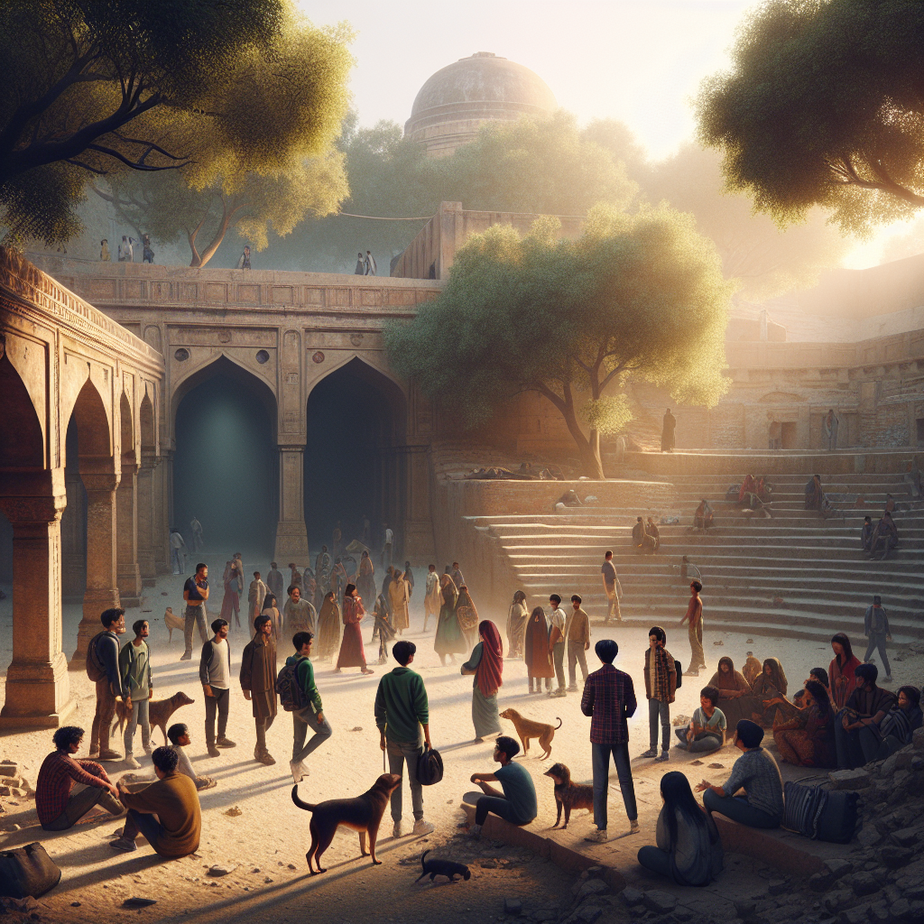
New Delhi — What happens when young minds from faraway Assam step into the layers of Delhi’s forgotten past? You get history class minus the textbooks—and strangely, a sense of present-tense discovery. Recently, students from Tezpur took to the capital, not for selfies at India Gate, but to wander paths even some locals haven’t tread. So what’s still buried under Delhi’s flyovers and fast life? Turns out—plenty.
When students become history detectives
According to their itinerary, this wasn’t your average student city tour. The group of university students from Tezpur embarked on a unique heritage exploration across Delhi, focusing on lesser-known historical sites rarely visited by even lifelong Dilliwalas. These weren’t humdrum museum stops. Think pre-Mughal ruins, ancient stepwells tucked behind busy lanes, and crumbling colonial structures surrounded by modern chaos. According to reports, the students explored everything from Hauz Khas Fort’s lesser-seen rear ramparts to the forgotten precincts around Feroz Shah Kotla beyond the cricket stadium. The idea? Resurface the overlooked narratives of Delhi’s layered past—one footstep at a time.
Led by local historians and urban conservationists, the students mapped stories that lie behind nondescript walls—like the octagonal baoli (stepwell) near Dwarka Sector 9 which residents say still echoes with bats at dusk. “We didn’t know ruins like these existed in the middle of modern colonies,” said one of the visiting students. Their plans were part of a broader outreach to link Northeast educational communities with Delhi’s rich but poorly interpreted urban heritage legacy.
Why this matters to your everyday Dilliwala
Now, for the rest of us—whether we’re negotiating Karol Bagh traffic or scurrying around Nehru Place—the idea of heritage can feel like a school project. But there’s something refreshing about outsiders reminding us of what we’ve stopped seeing. For instance, a DTC bus driver near Kashmere Gate said he had “driven past Nicholson Cemetery every day for 12 years without once stopping to see what’s inside.” These stories are invisible until someone makes them visible again.
Local vendors, too, find an uptick in foot traffic when such educational walks happen. A juice stall near Mehrauli Archeological Park noted a 30% rise in weekday footfall last month during heritage student tours. “Most people usually come on weekends, but these kids came midweek, super respectful and curious,” the shopkeeper said. Moments like these also matter for shopkeepers and rickshaw guys whose earnings hinge on foot traffic, even if it’s temporary. Plus, some students returned to try the famed chhole kulche at Lotan in Chawri Bazaar—proving exploration leads to appetite!
How Delhi lets history fade in plain sight
If you’ve been in Delhi long enough, you know: it’s a city of seeing but rarely looking. Our metros glide past Purana Qila. Our roads are dug up without a second glance at what lies beneath. Compared to cities like Jaipur or even Kolkata—where heritage pride wears a public face—Delhi often hides its ruins behind malis’ quarters or garbage dumps. Remember the time when the Mehrauli stepwell (Rajon ki Baoli) got rediscovered because an Instagram influencer filmed a dance reel there?
This disconnect isn’t new. Post-Independence development buried plenty of Mughal and even pre-Sultanate remains under shopping complexes and bus depots. Restoration efforts exist, but too often they’re cosmetic—without public engagement. That’s why student visits like the one from Tezpur matter: they create citizen curiosity, the first step in civic awareness. And maybe, just maybe, fewer heritage sites will be used as shortcuts for morning exercise.
How to rediscover Delhi’s secrets
- Start with Dilli Haat INA and pick up the INTACH Heritage Walk calendar—it’s hyperlocal and led by experts who’ve lived the stories.
- Use the Delhi Metro’s Heritage Line (Lal Qila to Kashmere Gate) on a Sunday morning, and get off at every stop to explore nearby ruins manually. Bring water, wear shoes!
- Download apps like Sahapedia Trails or Talkatora Toli if you prefer self-guided tours (yes, the audio actually works well around Lodhi Garden).
📍 Spot Check: Feroz Shah Kotla metro station is your access point to more than just cricket. Nearby sites include the Kotla ruins, Delhi Gate, and Bhairon Mandir. Don’t miss the scribe-studded Ashoka Pillar still standing inside the ruins—it’s one of our oldest artefacts, and locals say it whispers wishes at dusk (take that with a pinch of mirchi).
The Final Word
Look, Delhi is infamous for ignoring its own reflection—but maybe it takes outsiders to hold up that mirror. The Tezpur students didn’t just “see” Delhi—they read it, touched it, and (hopefully) filtered fewer monochrome photos through Insta. Imagine if every college group, tuition batch, or even early-morning walking club started doing the same. Maybe our ruins wouldn’t just be relics—they’d be regular stops.
People Also Ask
Is this officially confirmed?
Yes, but implementation on ground may vary.
Who benefits the most?
Daily commuters, students and small shop owners.
Any hidden catch?
Check timings & local enforcement.
Have something to say? Drop a comment below!
#Delhi #DelhiNCR #UrbanHistory #StudentVoices #ExploreMore
About the Author