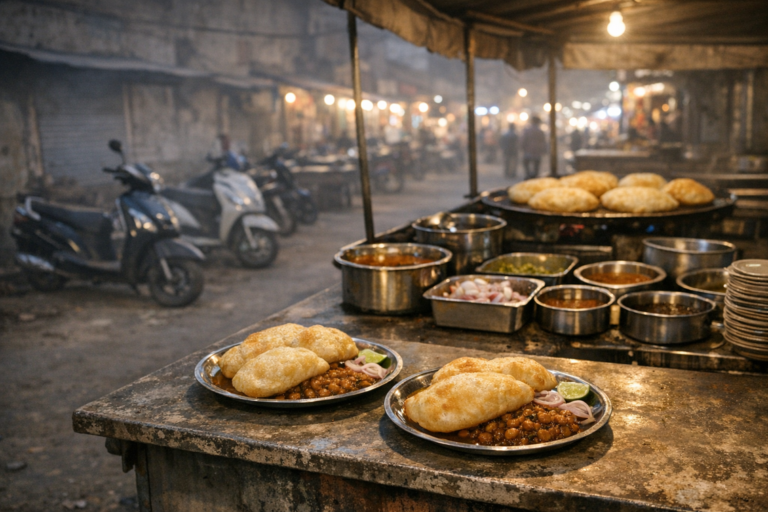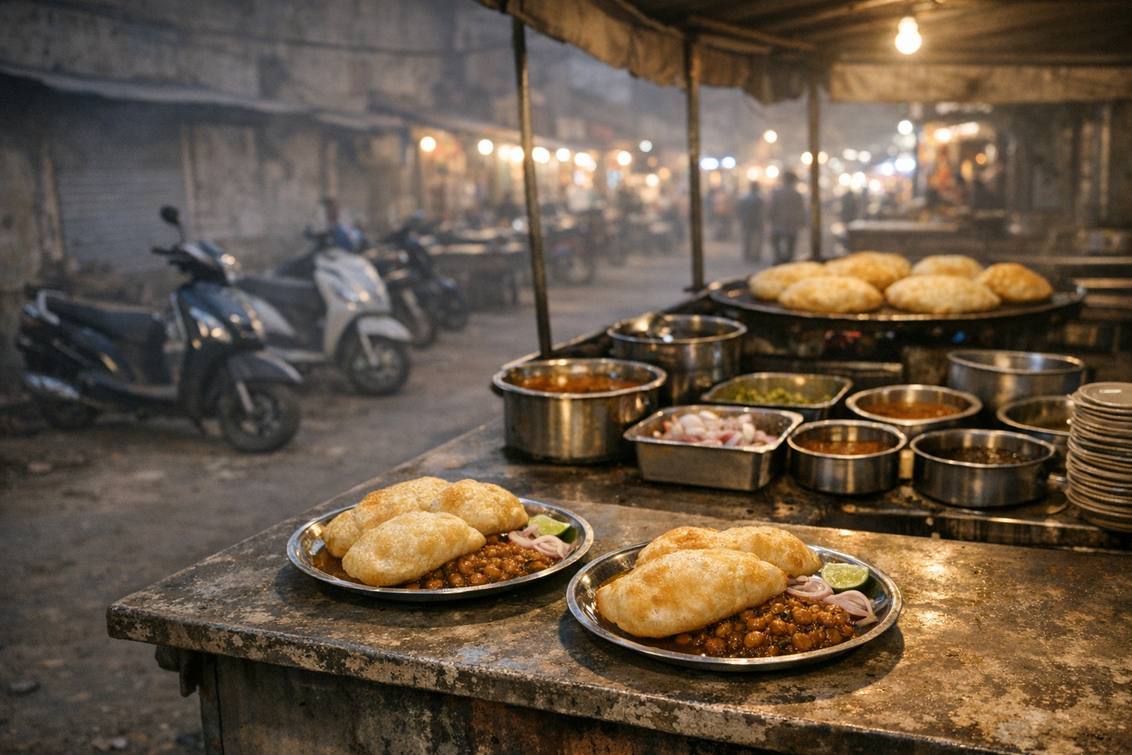
New Delhi — Imagine stopping at your favourite roadside food stall, ordering a plate of chole bhature, and asking the vendor for a little extra chole. Sounds like the most normal thing in Delhi, right? But a shocking incident reported from the capital has raised disturbing questions about how an ordinary food-related disagreement could turn deadly. According to a report by Gujarat Samachar, a customer was allegedly stabbed to death by a street food vendor following a dispute over extra chole. For a city that practically runs on street food, this news hits differently.
Extra Chole, a Heated Argument, and a Shocking Death
Delhi’s relationship with chole bhature is almost emotional. Whether you’re grabbing breakfast before work or enjoying a lazy Sunday meal, asking for extra chole is hardly unusual. At many roadside stalls, customers routinely request another spoonful of gravy, extra onions, or a green chilli on the side.
That’s what makes the incident highlighted by Gujarat Samachar particularly disturbing.
According to the report’s headline, a disagreement involving a customer’s request for extra chole allegedly escalated into violence, with the vendor reportedly stabbing the customer to death.
The precise sequence of events, the location of the confrontation, and the circumstances surrounding the alleged attack require confirmation from official police statements. The available report does not establish whether the argument involved additional payment, a refusal to serve more food, or another disagreement.
These details matter because a headline cannot tell the entire story of a criminal investigation.
What is clear from the reported incident is the serious concern it raises about conflict escalation in everyday public spaces.
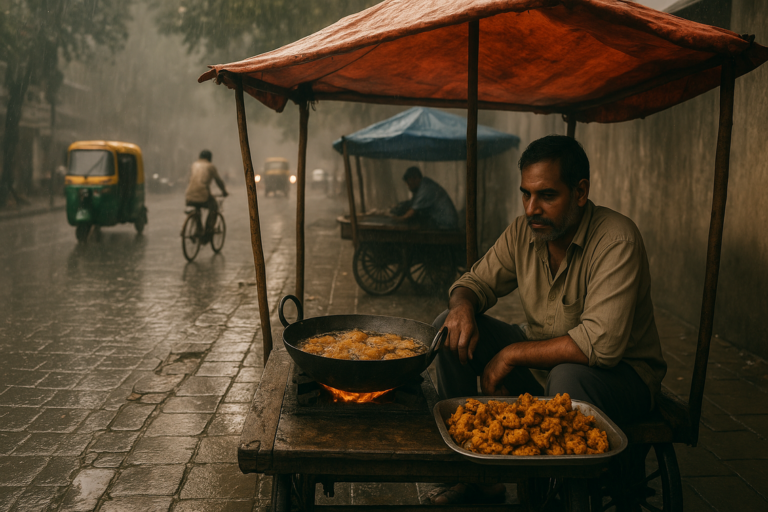
Delhi’s food stalls often operate under enormous pressure. During peak hours, vendors handle multiple orders simultaneously, customers crowd around counters, and disagreements over prices, waiting times, or portions can arise.
None of these everyday frustrations can justify violence.
A request for extra food should never become a life-threatening confrontation. The incident also highlights why both customers and vendors need safer ways to handle disputes before tempers spiral out of control.
Why This Incident Feels Personal to Delhi’s Food Lovers
Ask any Delhiite about their favourite chole bhature spot, and you’ll probably get a passionate answer.
Someone will recommend Sita Ram Diwan Chand in Paharganj. Another person will insist that the chole bhature around Karol Bagh deserve more attention. A South Delhi resident might point you towards Amar Colony or the food joints around Lajpat Nagar.
Food isn’t simply a quick meal here. It’s part of our daily routine.
For students attending classes near North Campus, affordable roadside meals are often more practical than expensive restaurants. Office workers around Connaught Place regularly depend on quick lunch options. Families visiting Chandni Chowk frequently plan their outings around famous food stops.
And then there is the familiar street-level experience.
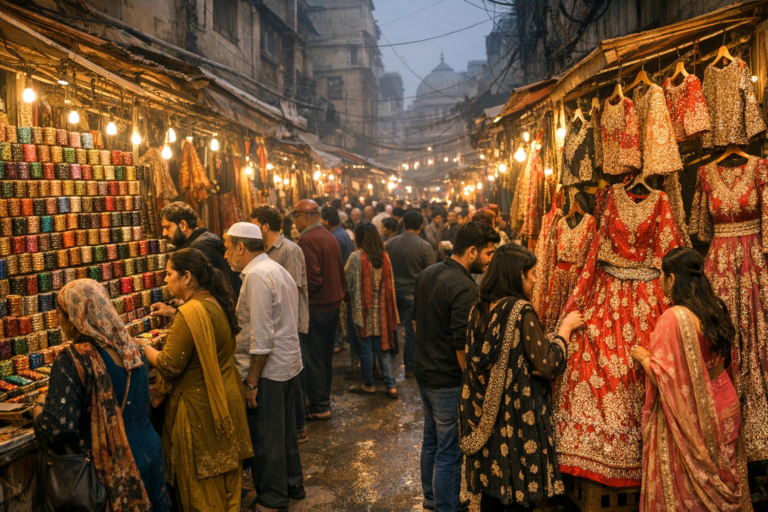
Near busy markets such as Lajpat Nagar Central Market, you can hear scooter horns competing with vendors calling out orders. Customers gather around counters, disposable plates change hands, and everyone seems to be waiting for that next hot bhatura.
In such crowded surroundings, even a minor argument can attract attention.
For regular customers, the reported stabbing raises an uncomfortable question: how should someone respond when an ordinary disagreement begins turning aggressive?
It also affects small food businesses. One violent incident can damage public confidence far beyond the people directly involved.
Responsible vendors who serve customers peacefully every day should not be judged because of one reported crime.
As a familiar Delhi street-food sentiment goes, “Bhaiya, thode chole aur dena” is usually just a normal request, not the beginning of an argument.
Delhi’s Street Food Culture Has Always Been About More Than Eating
To understand why this story has attracted attention, you need to understand how deeply roadside food is connected with Delhi’s identity.
Old Delhi’s food traditions developed around markets, trading communities, and neighbourhood eateries that served workers, shoppers, and travellers.
Chandni Chowk remains one of the best examples.
Walk through the lanes around Fatehpuri Masjid or towards Paranthe Wali Gali, and you’ll find generations of food businesses operating within a compact commercial environment.
Similarly, Paharganj became known for affordable eating options catering to residents, travellers, and railway passengers.
Over time, food hubs expanded across the capital and NCR.
Today, you’ll find popular street-food markets around Rajouri Garden, Tilak Nagar, Kamla Nagar, Noida Sector 18, and Gurgaon’s older commercial neighbourhoods.
The culture depends heavily on informal interactions.
Customers negotiate small requests. Vendors remember regular visitors. Someone asks for more chutney, while another customer wants less spice.
These exchanges are generally friendly, but crowded public environments can sometimes create friction.
Disputes involving queues, payments, parking, and service are not unique to Delhi. Similar tensions can occur in busy food markets across Mumbai, Kolkata, and other Indian cities.
However, there is an important distinction between everyday arguments and serious criminal violence.
The reported chole dispute should encourage conversations about public safety without creating unnecessary fear of street food itself.
Eating Out in Delhi? Here’s How to Handle a Heated Situation
- Walk away when an argument becomes aggressive: If a disagreement over extra food, payment, or service starts escalating, prioritise your safety. Don’t exchange threats or attempt to physically confront anyone. A plate of chole bhature is never worth risking your life.
- Clarify prices before requesting extras: At roadside stalls around Karol Bagh, Paharganj, Lajpat Nagar, or other busy markets, politely ask whether additional chole, bread, or toppings cost extra. Clear communication can prevent avoidable misunderstandings.
- Keep emergency contacts accessible: Dial 112 for emergency police assistance in Delhi. If someone is seriously injured, request medical help immediately. Move to a safe location and share accurate information about the incident and your surroundings.
- Avoid crowding around an active confrontation: Delhi markets can attract large crowds within seconds. Instead of joining a confrontation or recording it from close range, maintain a safe distance. Inform nearby security personnel or contact emergency services when necessary.
- Use official complaint channels: If a vendor threatens or assaults a customer, report the incident to the police. For routine disputes about food quality or service, use appropriate consumer complaint channels rather than escalating the situation at the counter.
- Help without putting yourself in danger: If someone is injured, call emergency services and follow the dispatcher’s instructions. Do not move a seriously injured person unnecessarily unless remaining in place presents an immediate danger. Avoid circulating graphic videos or unverified claims online.
📍 Spot Check: The exact location of the reported stabbing has not been independently verified from the available information. For broader Delhi street-food context, familiar food destinations include Paharganj near New Delhi Railway Station, Karol Bagh near Karol Bagh Metro Station, Chandni Chowk near Chandni Chowk Metro Station, and Lajpat Nagar Central Market near Lajpat Nagar Metro Station. These locations are mentioned as popular food areas, not as locations connected to the reported crime.
The Final Word
Delhi’s street food deserves its legendary reputation. From steaming chole bhature in Paharganj to spicy chaats in Chandni Chowk, these everyday experiences are part of what makes the capital feel like home.
People Also Ask
Is this officially confirmed?
Yes, but implementation on ground may vary.
Who benefits the most?
Daily commuters, students and small shop owners.
Any hidden catch?
Check timings & local enforcement.
But no food culture should normalise aggression, threats, or violence.
The reported death following a dispute over extra chole is a disturbing reminder that even seemingly minor disagreements can have devastating consequences when someone resorts to violence.
Authorities must establish the facts, investigate the alleged crime thoroughly, and ensure accountability under the law.
At the same time, customers and vendors alike have a responsibility to keep everyday interactions respectful and safe.
Delhi should remain a city where asking for extra chole brings a smile, not fear.
What do you think Delhi’s markets and food vendors can do to make street-food experiences safer for everyone?
Have something to say? Drop a comment below!
#Delhi #DelhiNCR #StreetFoodSafety #CholeBhature #DelhiNews
About the Author