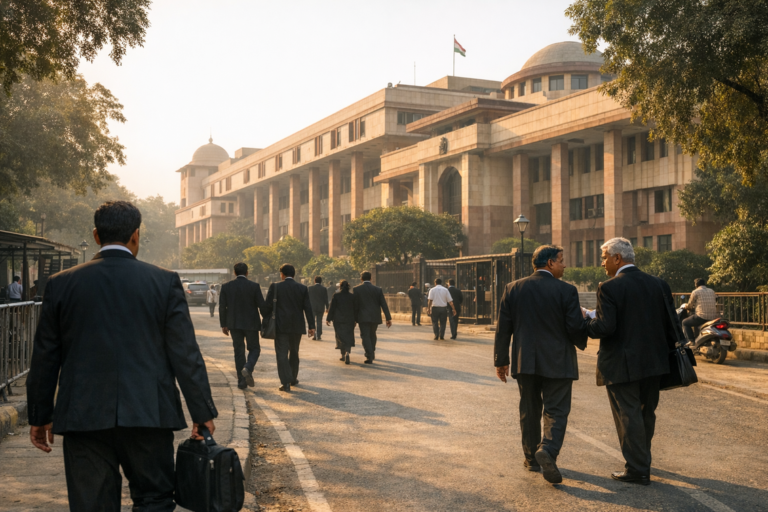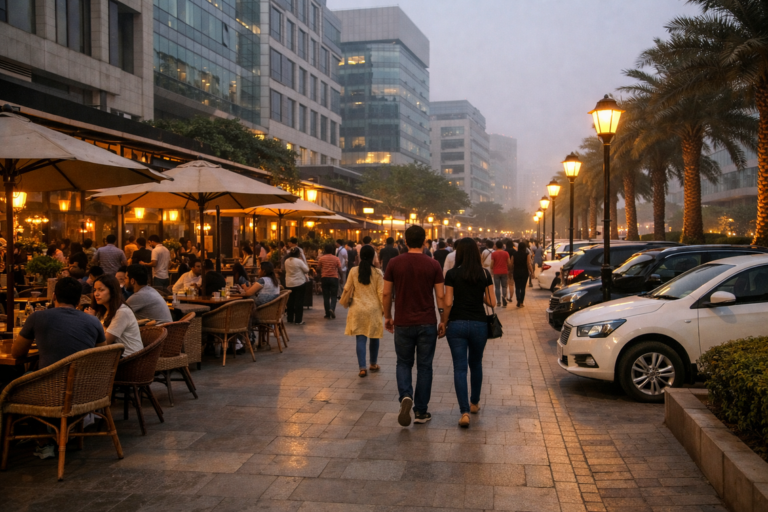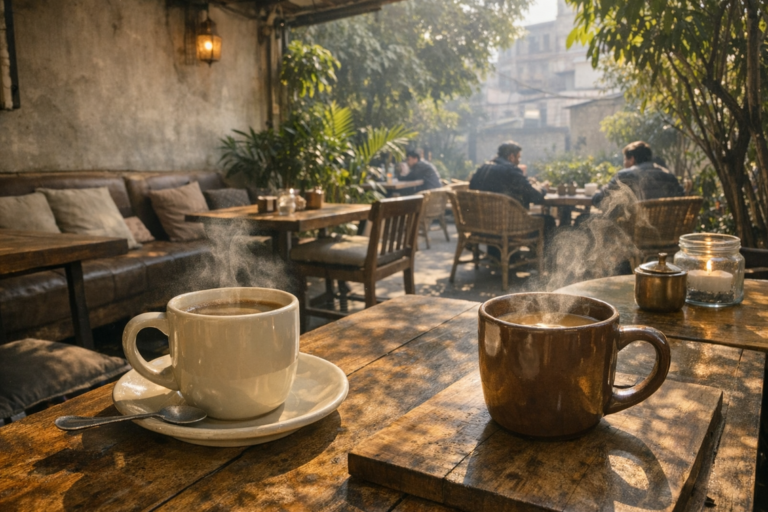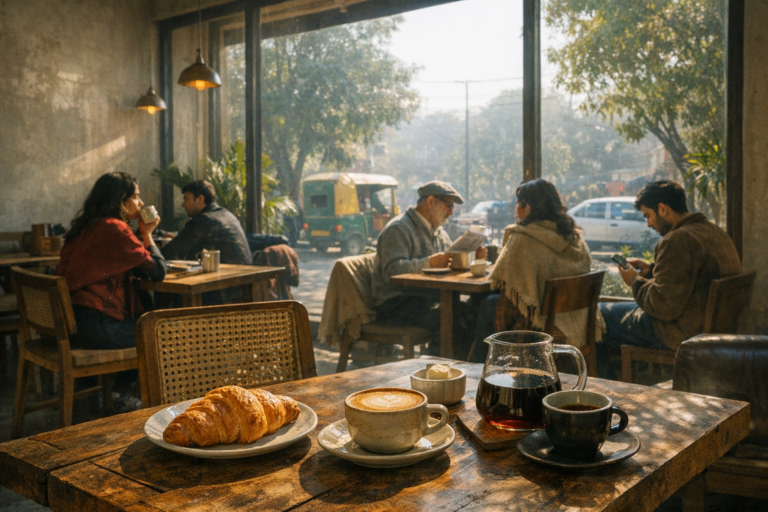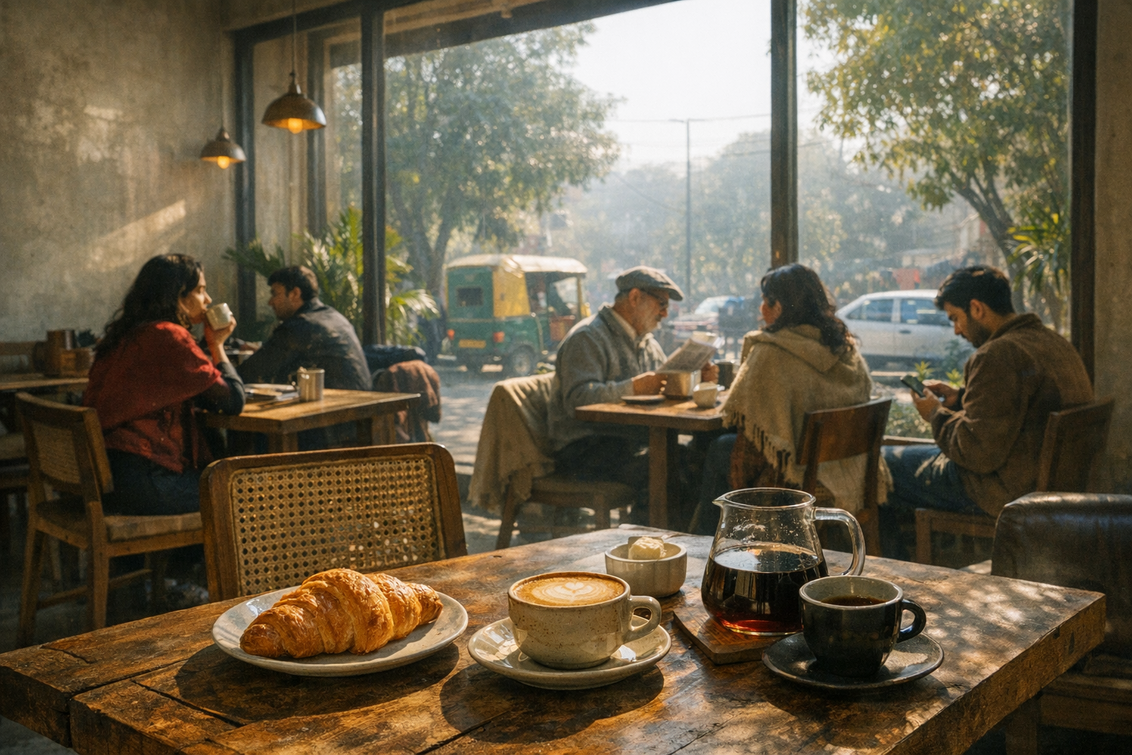
New Delhi — Another weekend, another café plan? If your Instagram feed is full of flaky croissants, creamy matcha, and expensive-looking coffee cups, you’re definitely not alone. Delhi NCR’s café culture is changing in 2026, and it’s no longer just about finding a pretty corner for photographs. From the narrow lanes of Shahpur Jat to the polished cafés of Khan Market and Gurgaon’s Golf Course Road, people are becoming more particular about what lands on their plates. But which café trends are actually worth spending your hard-earned money on?
Delhi’s Café Scene in 2026: Croissants, Coffee & Serious Competition
The global café and bakery scene is getting plenty of attention in 2026. Gourmet Traveller’s coverage of the best new cafés and bakeries highlights the continuing interest in fresh bakery concepts, speciality coffee, and thoughtfully designed neighbourhood spaces. While that coverage isn’t a ranking of Delhi establishments, it raises an interesting question: how do these international food trends compare with what’s happening across Delhi NCR?
For starters, Delhi’s café audience has become noticeably more interested in the details. A few years ago, a café could attract attention with exposed brick walls, hanging plants, and a decent cold coffee. Today, customers are also looking at the quality of the coffee beans, whether the croissants are freshly baked, and whether a ₹400 dessert actually delivers something memorable.
South Delhi remains an important destination for this kind of café experience. Greater Kailash 1’s M Block Market, Meherchand Market, Champa Gali, and Khan Market offer different versions of the modern café outing. Some visitors want a proper sit-down brunch, while others prefer a quick espresso and pastry before heading elsewhere.
Gurgaon has its own growing café audience, particularly around Golf Course Road, Sector 29, and neighbourhood shopping complexes. Noida residents, meanwhile, have options around Sector 18, Sector 104, and newer commercial pockets.
One noticeable shift is the growing appeal of bakery-first cafés. Instead of treating pastries as an afterthought, these places build their menus around sourdough, laminated pastries, cookies, cheesecakes, and freshly prepared sandwiches.
That matters because Delhi customers are increasingly comparing cafés on food quality, not just interiors. A beautiful cappuccino photograph might get someone through the door once. A genuinely good almond croissant is what could bring them back.
₹500 Coffee Dates? What Delhi Locals Are Actually Paying For
Here’s where things become interesting for Delhiites. Café culture is no longer limited to special occasions, but regular visits can become surprisingly expensive.
Consider a typical café outing in South Delhi. A cappuccino might cost approximately ₹200–₹350, while a croissant or slice of cake could add another ₹200–₹400. Order two drinks and one dessert, and your bill can easily approach ₹800–₹1,000 after applicable taxes and service charges.
These are illustrative price ranges, not verified menu prices for any particular establishment. Actual costs vary considerably by location and café.
For Delhi University students travelling from North Campus, that can be a substantial portion of a weekly eating-out budget. Students around Hudson Lane and Kamla Nagar often have more affordable alternatives nearby, making them useful areas for casual café hopping.
Office-goers in Connaught Place face a different problem: time. A café might have excellent coffee, but a 25-minute wait during lunch can make the experience impractical.
Families visiting Khan Market or GK 1 on weekends also need to think about parking, seating availability, and whether a café’s menu offers anything beyond coffee and desserts.
Residents frequently describe weekend café plans with a familiar warning: “Reach before the lunch crowd, warna table ke liye wait karna padega.” It’s sensible local advice rather than a verified quotation from a particular customer.
Around popular markets, the combination of honking cars, parking attendants directing vehicles, delivery riders collecting orders, and people waiting outside small cafés can make peak hours less relaxing than the photographs suggest.
The practical lesson? A good café isn’t necessarily the most expensive or most photographed one. It’s the place where the food, service, seating, and final bill make sense together.
From Connaught Place Coffee Houses to Artisan Bakeries: How Delhi Got Here
Delhi’s relationship with cafés didn’t begin with Instagram reels or fancy latte art.
Connaught Place has long been associated with coffee meetings, casual conversations, and places where people could spend an afternoon without ordering an elaborate meal. The Indian Coffee House tradition represents an older style of café culture, centred more on conversation and affordability than elaborate presentation.
Then came the expansion of national coffee chains, which made café meetings familiar to students, professionals, and families across the city.
During the 2010s, neighbourhoods such as Hauz Khas Village, Shahpur Jat, and Champa Gali helped popularise another kind of outing: cafés chosen partly for their atmosphere, creative menus, and unusual locations.
Delhi’s bakery culture was evolving alongside this shift. Traditional neighbourhood bakeries, cake shops, and established favourites such as Wenger’s in Connaught Place had already created a strong appetite for baked treats.
What changed was the vocabulary. Sourdough, pain au chocolat, focaccia, Basque cheesecake, and speciality espresso became more familiar to urban customers.
By 2026, international café trends are influencing what customers expect locally. However, Delhi still has its own preferences. A buttery croissant may be fashionable, but a good grilled sandwich, strong coffee, and comfortable seating remain difficult to beat.
There’s also a useful comparison with Mumbai and Bengaluru, where neighbourhood coffee culture has developed around different commuting patterns, commercial districts, and residential communities.
Delhi NCR’s distinctive challenge is distance. A bakery that looks 20 minutes away on a map can become a much longer outing once traffic, parking, and weekend crowds enter the picture.
Planning a Delhi Café Crawl? Here’s How to Avoid Wasting Money
- Choose your area before choosing your café: If you’re coming from North Delhi, explore Hudson Lane, Kamla Nagar, or Civil Lines before travelling across the city for a single pastry. South Delhi residents can compare cafés around GK 1 M Block Market, Meherchand Market, and Khan Market. Gurgaon visitors can explore options near Golf Course Road, while Noida residents can start around Sector 18 or Sector 104. Grouping nearby cafés saves money, travel time, and unnecessary frustration.
- Visit during quieter hours and check the menu first: Weekend brunch hours can be particularly crowded. As a general strategy, try arriving shortly after opening or during the mid-afternoon lull, though actual crowd patterns vary. Check current opening hours, menu prices, recent customer reviews, and reservation policies before leaving home. If you’re visiting specifically for croissants or sourdough, ask whether the bakery prepares them on-site and when fresh batches are usually available. Popular items sometimes sell out before closing.
- Set a realistic budget and judge the food, not the décor: For a casual outing, consider a budget of approximately ₹400–₹700 per person, depending on your order and chosen café. Sharing a dessert can help keep expenses manageable. If you’re exploring a new bakery, begin with one signature pastry and a simple coffee instead of ordering five different things. Check whether taxes and service charges are included in displayed prices. For families, confirm seating arrangements, accessibility, and parking beforehand. Most importantly, don’t confuse a long queue with guaranteed quality.
📍 Spot Check: Planning your next café outing? Here are some practical Delhi NCR reference points worth keeping in mind. For Connaught Place and nearby bakery stops, Rajiv Chowk Metro Station is usually the most convenient starting point. Wenger’s in the Inner Circle is a longstanding bakery reference, although its current menu and operating hours should be checked before visiting. For Khan Market, use Khan Market Metro Station on the Violet Line. GK 1 M Block Market is accessible from Greater Kailash Metro Station on the Magenta Line, followed by a short local commute depending on your destination. Champa Gali is located in the Saidulajab area, with Saket Metro Station providing a useful starting point. In North Delhi, GTB Nagar Metro Station connects visitors to Hudson Lane’s student-friendly food scene. Gurgaon café explorers can use the Rapid Metro network for parts of the Golf Course Road corridor, while Noida Sector 18 Metro Station provides easy access to one of Noida’s established shopping and dining districts. Remember that these are neighbourhood starting points, not a verified list of newly opened cafés. Always confirm an individual establishment’s location, opening status, and timings before travelling.
The Final Word
Delhi doesn’t need another café selling an average brownie at a premium price simply because the walls look good in photographs. What the city needs is more places that understand why people visit cafés in the first place: good food, consistent coffee, fair prices, and enough comfort to enjoy a conversation.
People Also Ask
Is this officially confirmed?
Yes, but implementation on ground may vary.
Who benefits the most?
Daily commuters, students and small shop owners.
Any hidden catch?
Check timings & local enforcement.
The international interest in new cafés and bakeries is worth watching because it may encourage Delhi businesses to experiment with better baking techniques, interesting menus, and more thoughtful service.
But the real winners will be the cafés that combine these ideas with Delhi’s practical expectations.
After all, whether you’re meeting friends in CP, planning a Sunday date in Champa Gali, or grabbing coffee after shopping in GK 1, the experience should be worth the journey.
So, Delhiites, what matters more to you in 2026: a beautiful café, genuinely good coffee, or bakery treats that justify their price?
Have something to say? Drop a comment below!
#Delhi #DelhiNCR #DelhiCafes #BakeryTrends #FoodTrends2026
About the Author