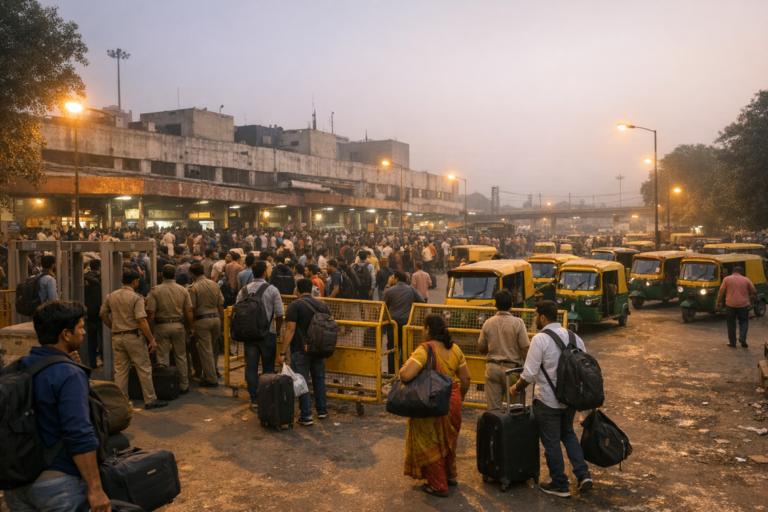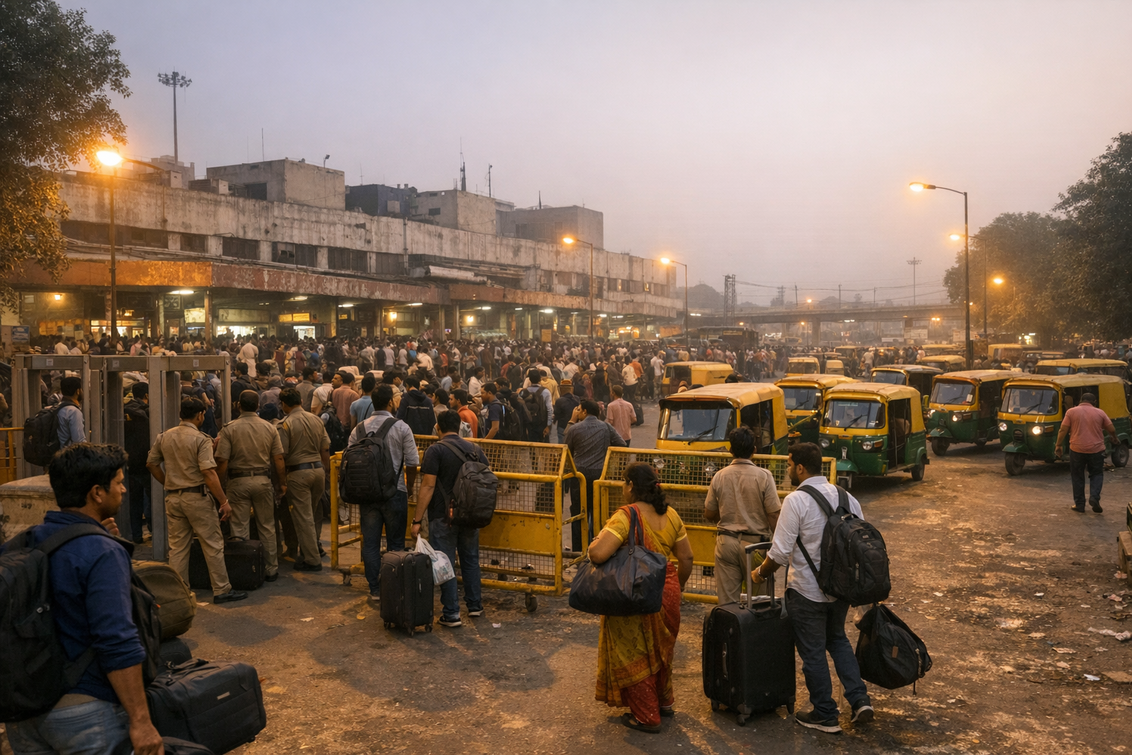
New Delhi — Ever tried catching a train from New Delhi Railway Station during Diwali, Chhath Puja, or a long weekend? If yes, you know the drill. Suitcases rolling over uneven pavements, auto drivers calling out destinations, families rushing towards platforms, and hundreds of passengers checking their phones for train updates. Now imagine navigating that chaos alongside lakhs of other travellers. With daily footfall at New Delhi Railway Station (NDLS) reaching approximately 3.3 lakh, the Delhi High Court has highlighted a serious concern: crowd management cannot wait until things go wrong.
3.3 Lakh Passengers at NDLS: Why the High Court Is Concerned
New Delhi Railway Station is not just another railway stop. It is one of the capital’s most important transport hubs, connecting Delhi with cities across Uttar Pradesh, Bihar, Punjab, Haryana, Rajasthan, and several other states.
According to a report by The Indian Express, the Delhi High Court has stressed the importance of implementing crowd-control measures ahead of major events, particularly when passenger movement at NDLS can reach approximately 3.3 lakh people.
That number deserves attention. To put it into perspective, imagine the crowds at several packed cricket stadiums moving through one railway station over the course of a day.
The problem is not simply how many passengers use the station. It is how those passengers move through entrances, staircases, foot overbridges, waiting areas, and platforms.
During festivals, special events, and peak travel periods, passenger movement can become concentrated within short windows. A delayed train, an unexpected platform change, or a sudden rush towards a particular boarding point can create dangerous congestion.
This is why preventive planning matters.
Effective crowd management involves more than placing additional security personnel near station entrances. It requires advance planning, clear passenger information, controlled access where necessary, coordination between railway officials and police, and systems that prevent overcrowding in vulnerable areas.
The court’s message, as reported, places attention on preparation before major gatherings rather than relying entirely on emergency responses.
For Delhi residents, that is an important distinction. A railway station handling lakhs of passengers needs predictable movement, not last-minute improvisation.
From Paharganj to Ajmeri Gate: What This Means for Delhi Travellers
Anyone familiar with NDLS knows that the journey often becomes stressful before passengers even reach their platforms.
On the Paharganj side, the approach roads can become crowded with taxis, auto-rickshaws, pedestrians, luggage carts, and people searching for the correct entrance.
The Ajmeri Gate side has its own challenges, particularly when passengers arrive from the Airport Express Line, the New Delhi Metro interchange, or nearby commercial areas.
During busy travel periods, even a short distance between the drop-off point and station entrance can take longer than expected.
For a student travelling from Mukherjee Nagar to catch an overnight train home, a crowded entrance can mean additional anxiety about missing departure time.
For an office worker leaving Connaught Place after work, traffic around the station can turn an otherwise straightforward journey into a race against the clock.
Families travelling with elderly relatives or small children face even greater difficulties. Managing luggage while navigating crowded staircases and platforms is particularly challenging when passenger information is unclear.
Shopkeepers, food vendors, hotel operators, and transport workers around Paharganj also depend on smooth passenger movement.
As travellers familiar with the area often put it, “Station ke bahar hi itna time lag jaata hai, andar train tak pahunchna alag challenge hai.”
That familiar frustration becomes a genuine safety concern when large numbers of passengers converge at the same time.
Better crowd management would benefit not only railway passengers but also the neighbourhoods surrounding the station.
Delhi Has Seen the Risks Before: Why Planning Matters
Concerns about railway crowd management are not new to Delhi.
In February 2025, a deadly crowd crush at New Delhi Railway Station brought national attention to passenger safety, particularly during periods of exceptionally heavy travel demand.
The incident raised difficult questions about crowd monitoring, passenger communication, platform access, and emergency preparedness.
Such concerns are especially relevant during major religious gatherings and festival travel periods, when large numbers of passengers may head towards the same destinations.
Delhi’s transport system also faces seasonal pressure during Diwali, Chhath Puja, Holi, and summer holidays.
Many passengers travel from the capital to hometowns in Bihar and eastern Uttar Pradesh, while others arrive in Delhi for employment, education, medical treatment, and family visits.
There are lessons available from other large transport networks.
Delhi Metro, for example, uses regulated passenger movement, security screening, public announcements, and operational restrictions when necessary to manage heavy crowds.
However, railway stations face additional complications because passengers frequently carry large bags, arrive in groups, and wait for long-distance trains.
Railway crowd management therefore requires its own approach rather than simply copying Metro procedures.
The goal should be straightforward: identify dangerous crowd concentrations early and prevent them from developing into emergencies.
Travelling Through NDLS Soon? Follow These Delhi-Smart Safety Tips
- Reach early, especially during festivals: For long-distance trains during Diwali, Chhath Puja, Holi, and major holiday periods, consider reaching the station around 60–90 minutes before departure. Allow additional time if you are travelling with children, elderly passengers, or heavy luggage. Follow any official instructions about when passengers may enter particular areas.
- Choose your station entrance carefully: NDLS has major access points on the Paharganj and Ajmeri Gate sides. Check your train details and available access arrangements before leaving home. Do not assume the nearest road entrance will always be the most convenient during crowd restrictions.
- Use Delhi Metro where practical: The New Delhi Metro station connects with the Yellow Line and Airport Express Line. Travellers coming from Rajiv Chowk, Kashmere Gate, Hauz Khas, or other connected stations may find Metro more predictable than road transport during peak traffic. Remember that Metro access does not guarantee immediate entry into railway premises.
- Check train information through official channels: Use the National Train Enquiry System (NTES), official railway announcements, and station displays to verify running status and platform information. Platform assignments can change, so avoid relying entirely on old screenshots or forwarded WhatsApp messages.
- Avoid rushing towards platforms: If a platform change is announced, move carefully and follow railway staff instructions. Running with heavy luggage on staircases or foot overbridges increases the risk of falls and crowd pressure. Never cross railway tracks to save time.
- Make a family meeting plan: Travelling with children or senior citizens? Agree on a safe meeting point before entering crowded areas. Keep phones charged, carry essential medicines in an accessible bag, and ensure children know how to approach railway security personnel if separated.
- Travel light when possible: Large suitcases become difficult to manage in crowded passages. Keep important documents, tickets, medicines, and valuables in a smaller bag that remains with you. Avoid stopping suddenly in narrow passages to rearrange luggage.
- Know when to move away: If a staircase, entrance, or waiting area becomes dangerously packed, do not push forward. Move towards a less crowded area if possible and alert railway staff or Railway Protection Force personnel. For railway security assistance, passengers can use the official RailMadad system or railway helpline 139. Call emergency services on 112 if there is an immediate threat to life.
📍 Spot Check: New Delhi Railway Station sits between two important city zones. The Paharganj entrance connects towards Main Bazaar, Arakashan Road, and the budget hotel district, while the Ajmeri Gate side provides access towards Kamla Market and the New Delhi Metro station. Rajiv Chowk in Connaught Place is one Yellow Line Metro stop away from New Delhi. Travellers arriving from Noida can connect through the Blue Line at Rajiv Chowk, while those coming from Gurgaon can use the Yellow Line towards New Delhi. Kashmere Gate, another major interchange, is also connected through the Yellow Line. During major travel periods, check Delhi Metro updates, Delhi Traffic Police advisories, and official Indian Railways announcements before finalising your route.
The Final Word
Delhi does not need another reminder of what can happen when large crowds meet poor planning. New Delhi Railway Station is essential to the lives of lakhs of passengers, and managing that responsibility requires more than temporary barricades during festival season. The Delhi High Court’s emphasis on advance crowd control deserves sustained attention from railway authorities. Better announcements, clearer access routes, coordinated train scheduling, trained personnel, and proper monitoring of overcrowded areas could make a meaningful difference. Passengers also have a role to play by following instructions and avoiding unnecessary rushing. But the primary responsibility for safe station operations must remain with the authorities. Delhi deserves a railway station where catching a train does not feel like navigating an obstacle course. What changes would you like to see at NDLS before the next major travel rush?
People Also Ask
Is this officially confirmed?
Yes, but implementation on ground may vary.
Who benefits the most?
Daily commuters, students and small shop owners.
Any hidden catch?
Check timings & local enforcement.
Have something to say? Drop a comment below!
#Delhi #DelhiNCR #RailwaySafety #NDLSUpdate #DelhiNews
About the Author