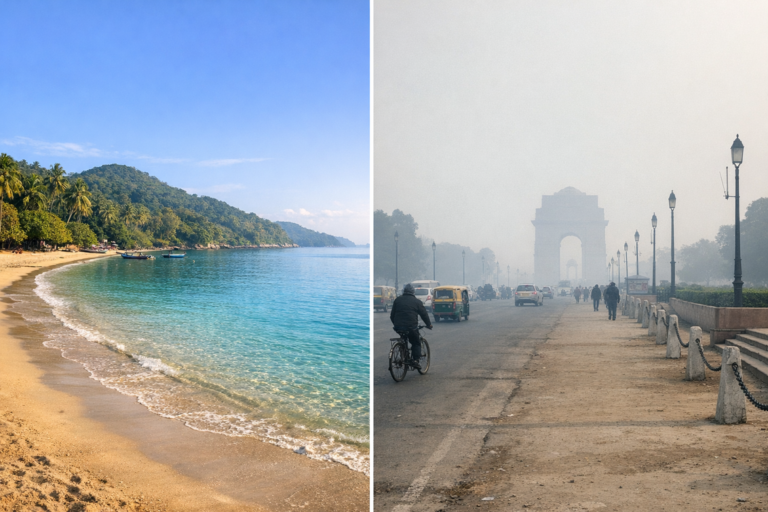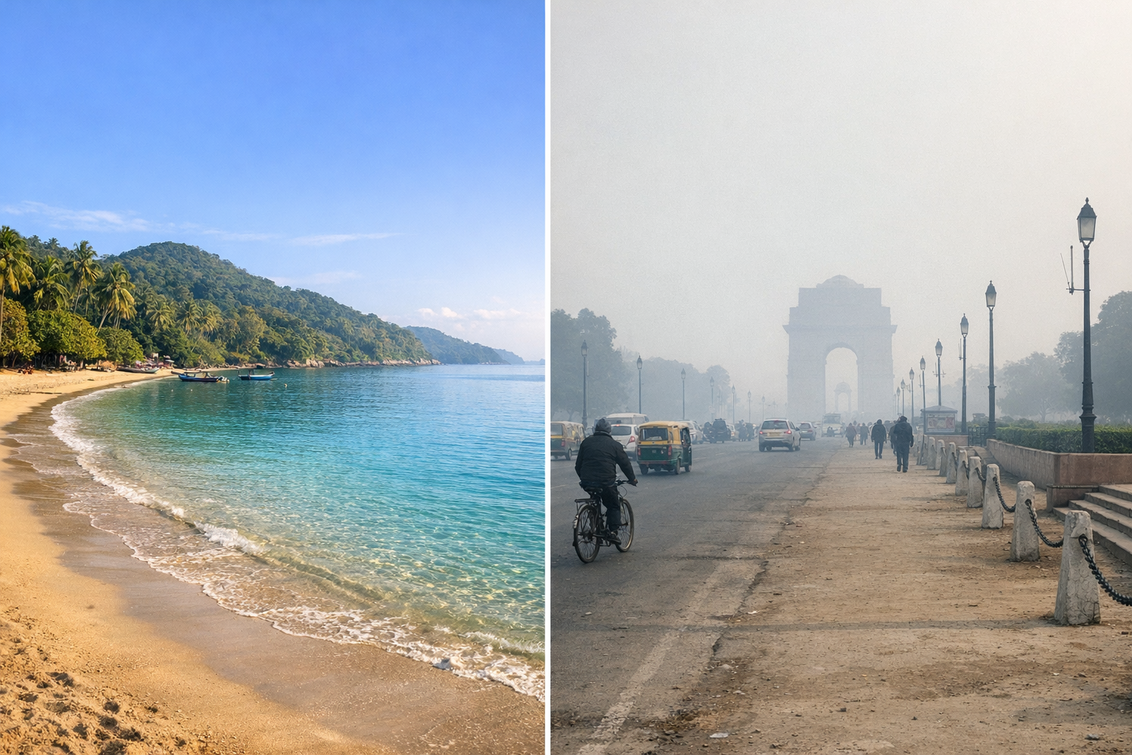
New Delhi — Imagine waking up in Delhi, checking your phone, and seeing an AQI of 350. Now imagine sipping coconut water beside a turquoise beach just a few hours later, where the air quality is actually pleasant. Sounds like a dream, right? For Delhiites tired of winter smog, itchy eyes, and the never-ending debate over air purifiers, international destinations with an Air Quality Index (AQI) below 50 are becoming increasingly attractive. And here’s the interesting part: several potential clean-air escapes are less than five hours away by flight.
From Delhi’s Smog to Cleaner Skies: Where Can You Fly?
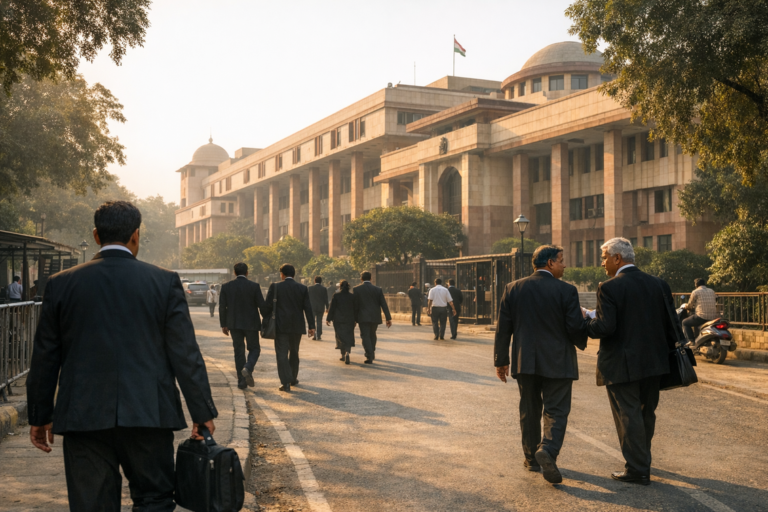
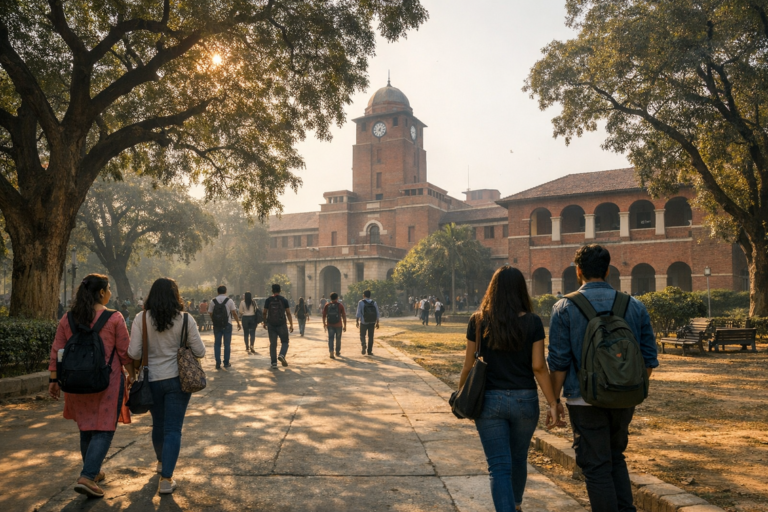
Every winter, Delhi faces the same frustrating reality. The temperature drops, the morning fog thickens, and pollution levels often climb into the “very poor” or “severe” categories. Whether you live near Punjabi Bagh, commute through ITO, or work in Cyber City, Gurgaon, escaping polluted air can feel almost impossible.
But international travel offers an interesting alternative. Several destinations accessible from Indira Gandhi International Airport have the potential to offer significantly cleaner air, especially during favourable weather conditions.
According to the Central Pollution Control Board’s Indian AQI classification, readings between 0 and 50 fall in the “Good” category. However, air quality changes daily, and no destination can guarantee an AQI below 50 throughout the year.
Here are five destinations worth considering for a short international break from Delhi:
1. Paro, Bhutan: Surrounded by Himalayan mountains, Paro offers forested landscapes, peaceful monasteries, and opportunities for outdoor walks. Direct flight schedules vary, but the journey is generally within the five-hour flying window when nonstop services operate.
2. Kathmandu, Nepal: Around two hours away by direct flight, Kathmandu offers mountain views, temples, and nearby hill retreats. However, Kathmandu itself experiences serious seasonal air pollution, so travellers should check current AQI readings before booking.
3. Malé, Maldives: Direct flights, when available, can take approximately four hours. The Maldives offers ocean breezes, beaches, and island resorts, although air quality can vary across individual islands.
4. Colombo, Sri Lanka: Approximately four hours away on a direct flight, Colombo provides access to coastal areas, tropical greenery, and relaxed seaside experiences. Coastal conditions can be favourable, but AQI should be verified for your travel dates.
5. Dhaka, Bangladesh: Reachable in roughly two hours by direct flight, Dhaka is geographically convenient. However, it frequently experiences high pollution levels, particularly during winter. It is not a reliable clean-air getaway and should only be considered for this purpose after checking live air-quality data.
The important distinction is that these destinations are within a relatively short flying distance, but they are not guaranteed to have AQI readings below 50. Flight durations are approximate and depend on airline schedules, routes, and operational conditions.
Why Delhi Families and Office-Goers Are Looking Beyond Weekend Staycations
For years, Delhi’s standard winter escape plan involved driving to Jaipur, heading towards the hills, or booking a weekend resort around Neemrana. But when the entire region is experiencing poor air quality, travelling a few hours by road doesn’t necessarily solve the problem.
Residents of South Delhi neighbourhoods such as Greater Kailash, Saket, and Vasant Kunj are particularly well-connected to the airport through major roads and the Delhi Metro network.
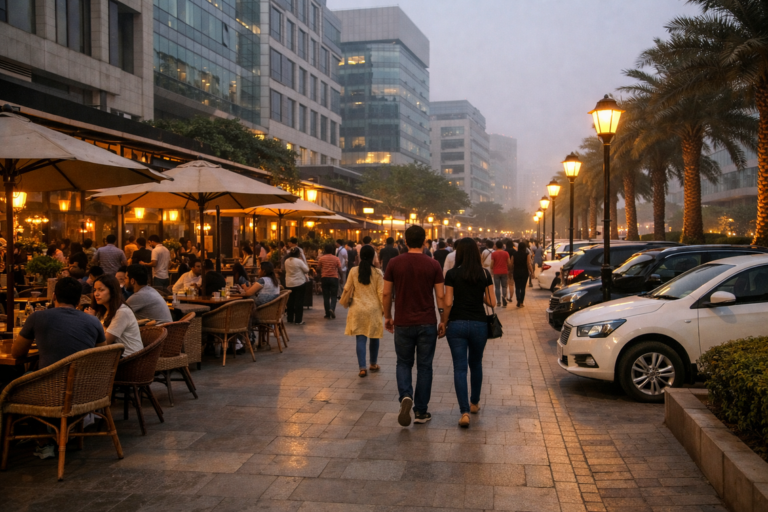
For office-goers working in Connaught Place or Gurgaon’s Cyber City, a three- or four-day international holiday may seem more practical than a week-long vacation requiring extended leave.
Students also have reasons to explore shorter international breaks. During semester holidays, destinations such as Nepal and Sri Lanka can offer cultural experiences without requiring extremely long flights.
Families with young children or elderly members may value destinations where outdoor activities are more comfortable, especially when Delhi’s pollution makes morning walks and playground visits difficult.
However, there’s a financial reality worth remembering.
A short flight doesn’t automatically mean a cheap holiday. Airfares, visas, airport transfers, hotels, travel insurance, and food expenses can quickly increase the total cost.
As Delhi residents often put it during winter pollution discussions, “You can escape the traffic for a weekend, but escaping the air is a different story.”
It’s a sentiment that makes sense when even a simple evening walk around Lodhi Garden can become an AQI calculation.
And anyone who regularly crosses Dhaula Kuan during the evening rush knows the experience: endless brake lights, impatient horns, and a layer of haze that sometimes makes distant buildings difficult to see.
For such commuters, the idea of landing somewhere with cleaner air is understandably appealing.
Delhi’s Winter Pollution Problem Didn’t Start Yesterday
Delhi’s air pollution crisis has been building for decades, driven by a combination of vehicle emissions, construction dust, industrial activity, regional pollution sources, and seasonal weather conditions.
During winter, lower temperatures, weak winds, and temperature inversions can trap pollutants closer to the ground.
The situation becomes particularly challenging around October and November, when additional seasonal factors, including agricultural residue burning in surrounding regions, can contribute to pollution episodes.
Older Delhi residents may remember when winter mornings were mainly associated with thick fog, hot chai, and sweaters from Sarojini Nagar Market.
Today, those same mornings frequently involve checking pollution apps before opening windows or sending children outdoors.
Over the years, measures such as the Graded Response Action Plan (GRAP), restrictions on certain construction activities, and vehicle-related interventions have attempted to address severe pollution episodes.
Yet Delhi’s air-quality challenge remains complex because pollution doesn’t respect municipal or state borders.
This is also why comparing Delhi with island destinations requires some caution.
Places such as the Maldives benefit from different geography and atmospheric conditions, while cities such as Kathmandu can experience pollution trapped by surrounding mountains.
Even destinations famous for greenery can experience temporary pollution spikes due to traffic, wildfires, dust, or weather changes.
Clean-air tourism may sound like a modern travel trend, but its underlying appeal is simple: people want to spend time outdoors without constantly worrying about what they’re breathing.
Planning a Clean-Air Escape From Delhi? Do These 3 Things First
- Check live AQI before booking: Don’t assume a destination has clean air simply because it has beaches, mountains, or forests. Use platforms such as IQAir, WAQI, or official local environmental monitoring websites to review recent readings and pollution trends. Compare multiple days rather than relying on one unusually good reading. Remember that different countries may use different AQI calculation methods, so also check PM2.5 concentrations when possible.
- Compare actual travel time, not just flight duration: A four-hour flight can easily become an eight-hour journey after accounting for travel to IGI Airport, immigration, security checks, baggage collection, and hotel transfers. Travellers starting from Noida Sector 62 or Dwarka should plan their airport journey carefully. The Airport Express Metro from New Delhi Metro Station can be a convenient option for reaching Terminal 3, but confirm your airline’s departure terminal and allow sufficient time for international check-in. Check passport validity, visa requirements, entry rules, and flight availability before paying for non-refundable bookings.
- Choose destinations based on weather, budget, and activities: Bhutan may suit travellers interested in monasteries and mountain scenery, while Sri Lanka and the Maldives offer coastal experiences. Nepal can work well for cultural tourism, although Kathmandu’s pollution requires particular attention. Compare flights departing on weekdays, check hotel cancellation policies, and consider travel insurance. Families with respiratory conditions should carry prescribed medication and consult a healthcare professional when necessary. Cleaner outdoor air may offer a more comfortable experience, but a short holiday is not a medical treatment for pollution exposure.
📍 Spot Check: Planning your trip from Delhi? Travellers near Connaught Place can access the Airport Express Line from New Delhi Metro Station, while residents around Dhaula Kuan can use the Dhaula Kuan Airport Express station. Those travelling from Saket, Hauz Khas, or Greater Kailash should check interchange routes and airport terminal connections in advance. Gurgaon residents heading from Cyber City should account for traffic around NH-48 and the airport approach roads, particularly during evening peak hours. For last-minute travel essentials, markets around Connaught Place, Karol Bagh, and Sarojini Nagar offer plenty of luggage and winter-wear shopping options. Confirm Metro operating hours before planning an early-morning airport transfer.
The Final Word
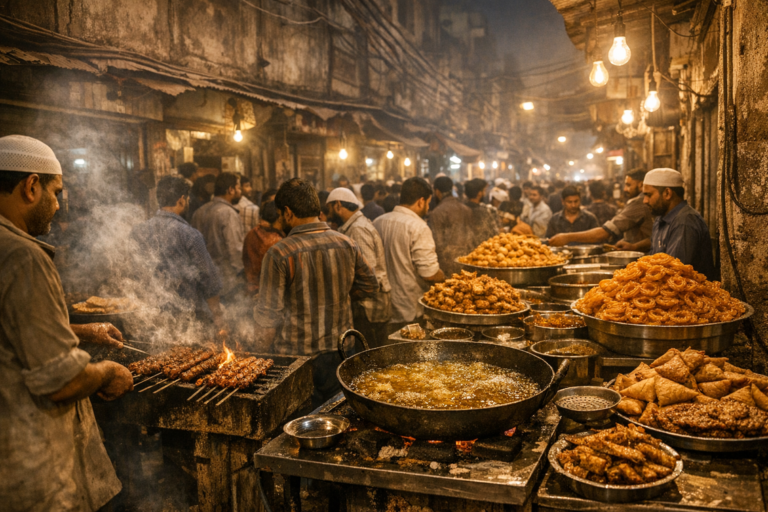
Delhi has plenty to love: winter food walks through Chandni Chowk, Sunday mornings around India Gate, and those perfect November evenings when the weather finally feels comfortable. Unfortunately, pollution often interrupts the best parts of the season.
People Also Ask
Is this officially confirmed?
Yes, but implementation on ground may vary.
Who benefits the most?
Daily commuters, students and small shop owners.
Any hidden catch?
Check timings & local enforcement.
That’s why shorter international holidays with the possibility of cleaner air deserve attention. A quick flight to Bhutan, Sri Lanka, or the Maldives can offer a refreshing change of scenery without requiring two weeks of annual leave.
But remember, an AQI below 50 is a condition to verify, not a promise attached to a destination. Air pollution can change quickly, and even beautiful holiday spots aren’t immune.
Ultimately, Delhi deserves cleaner air at home, not just better options for escaping it.
Until that happens, would you consider spending money on an international weekend getaway simply to breathe cleaner air?
Have something to say? Drop a comment below!
#Delhi #DelhiNCR #CleanAirTravel #InternationalGetaways #TravelTrends
About the Author