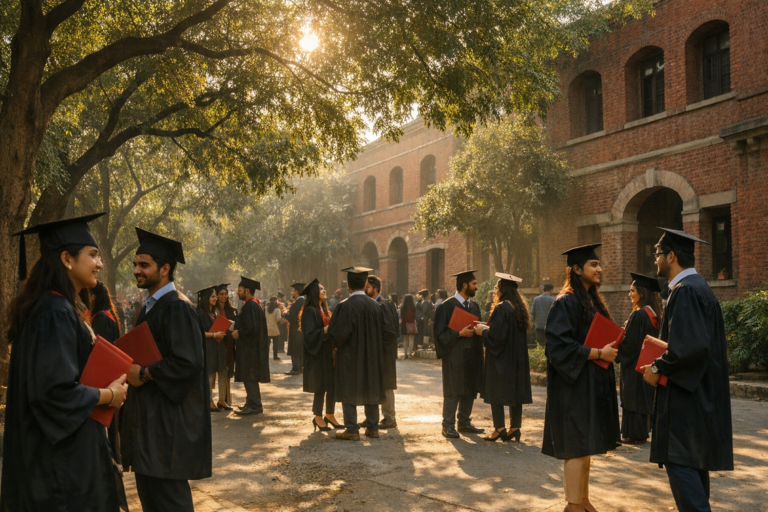
New Delhi — The journey from fighting for a seat on the Yellow Line to finally holding a university degree deserves its own celebration. But once the graduation photographs are uploaded and the family WhatsApp groups settle down, one question inevitably arrives: what next? Union Minister Piyush Goyal’s recent message to Delhi University graduates about pursuing their dreams and contributing to Viksit Bharat 2047 offers a timely opportunity to discuss careers, entrepreneurship and the changing ambitions of Delhi’s young population.
Beyond the Degree: What Viksit Bharat 2047 Means for DU Graduates
According to a report by DD India, Union Minister Piyush Goyal encouraged Delhi University graduates to pursue their ambitions while contributing towards the vision of Viksit Bharat 2047. The initiative represents the broader national ambition of making India a developed nation by 2047, marking 100 years of independence. But what does this actually mean for a graduate searching for their first job in Delhi? The answer goes beyond government examinations, corporate placements and traditional career choices. Delhi-NCR offers opportunities across technology, digital marketing, healthcare, finance, education, manufacturing, sustainability and entrepreneurship. A commerce graduate from North Campus could explore financial technology companies in Gurugram, while a humanities student might find opportunities in public policy, research or communications around central Delhi. Meanwhile, Noida’s expanding commercial districts offer possibilities in information technology, media and other professional services. Contributing to national development does not necessarily require launching a large company or securing a prestigious government position. A graduate helping neighbourhood businesses adopt digital payment systems, developing affordable educational resources or creating employment through a small enterprise can also make a meaningful contribution. The challenge lies in converting academic knowledge into practical abilities. Employers frequently look for communication skills, problem-solving capabilities, digital literacy and relevant work experience alongside educational qualifications. For DU graduates, building these abilities while exploring different industries may prove more valuable than immediately chasing impressive job titles or accepting career advice based solely on social expectations.
From Kamla Nagar to Cyber City: The Ground Reality of Graduate Life
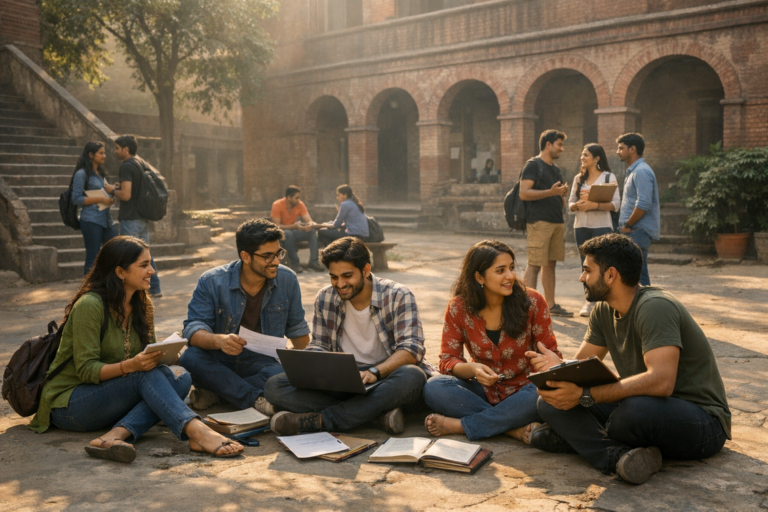
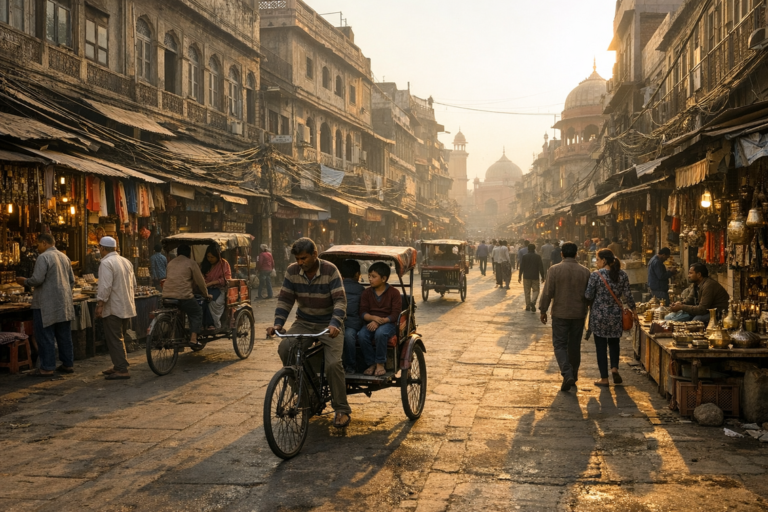
For many Delhi families, graduation brings expectations that are considerably more immediate than a development target set for 2047. Parents want financial stability, students want independence, and everyone wants a career that justifies years of educational expenditure. Around Kamla Nagar and Hudson Lane, conversations about internships, competitive examinations and placement packages are familiar parts of student life. Outside Vishwavidyalaya Metro Station, the calls of e-rickshaw drivers compete with traffic noise as students hurry between classes, interviews and coaching centres. A line that captures a common graduate dilemma might be: “Degree toh mil gayi, ab experience kahan se laayein?” It reflects the frustration of entry-level applicants encountering vacancies that already demand professional experience. Commuting presents another practical challenge. Someone living in Rohini or Burari and working in Gurugram may spend several hours travelling each day, depending on their route and office location. That journey affects monthly expenses, energy levels and the time available for additional learning. Local businesses also have a role in this transition. A neighbourhood café, clothing retailer or coaching institute could benefit from hiring graduates with accounting, content creation or social media skills. Such opportunities may not carry the recognition of a multinational company, but they can provide valuable experience and introduce young professionals to everyday business challenges.
How Delhi University Became a Launchpad for Generations
Established in 1922, the University of Delhi has witnessed extraordinary changes in the capital’s educational and economic landscape. Earlier generations often associated a successful university education with civil services, banking, teaching, law or secure government employment. These professions remain important, but the expansion of Delhi-NCR has significantly widened the available choices. The development of commercial centres in Gurugram and Noida, alongside improved Metro connectivity, has changed how graduates approach employment. Today, a student attending college near the historic streets of Civil Lines can explore opportunities in corporate offices, research institutions and emerging businesses across the region. Delhi also offers an unusual combination of academic institutions, government departments, international organisations, media houses and independent enterprises. Unlike cities where employment opportunities may be concentrated around a particular industry, the capital provides exposure to several professional sectors. However, this diversity also brings intense competition. The modern graduate must often navigate changing recruitment practices, technological developments and rising living expenses. The Viksit Bharat 2047 discussion therefore arrives at a time when career flexibility, continuous learning and accessible employment opportunities matter as much as traditional academic achievement.
Just Graduated from DU? Three Things Worth Doing Right Now
- Build a practical 90-day career plan: Instead of applying randomly to hundreds of vacancies, shortlist two industries that genuinely interest you. Review at least 20 relevant job descriptions and identify recurring skill requirements. Use resources such as SWAYAM, the National Career Service portal at ncs.gov.in and your college placement cell to explore training and employment opportunities. Prepare a one-page CV and create two or three work samples demonstrating your abilities. Never pay an unverified recruiter for a guaranteed job offer, and independently check company details before sharing sensitive documents.
- Calculate your actual Delhi-NCR employment costs: A higher salary does not automatically translate into better savings. Before accepting a job in Cyber City, Udyog Vihar or Noida Sector 62, estimate your monthly Metro fares, last-mile transport expenses, meals and potential accommodation costs. Check the route using official Metro information and, where possible, undertake a trial commute during regular office hours. Compare the total travel time with your working schedule. Graduates considering shared accommodation around Laxmi Nagar, Mukherjee Nagar or GTB Nagar should also budget for electricity, deposits and food rather than focusing exclusively on advertised rent.
- Explore entrepreneurship without risking your savings: You do not need an expensive office or substantial investment to test a business idea. Graduates interested in marketing, design, tutoring or technology can begin by identifying genuine problems faced by neighbourhood businesses. For example, retailers in Kamla Nagar might need better online product catalogues, while small restaurants around Vijay Nagar could require help managing their digital presence. Start with a clearly defined pilot project, agree on payment terms in writing and collect customer feedback. Explore your college entrepreneurship cell, the Delhi University Innovation and Incubation Centre and the official Startup India portal for relevant mentorship opportunities and eligibility information.
📍 Spot Check: Vishwavidyalaya Metro Station on the Yellow Line remains a convenient starting point for exploring Delhi University’s North Campus. Nearby Kamla Nagar Market, Hudson Lane, Arts Faculty and the Central Reference Library form part of the wider student ecosystem. Graduates interested in government recruitment should monitor official notices from the university and relevant recruitment bodies, while corporate job seekers can explore commercial districts around Barakhamba Road, Nehru Place, Gurugram’s Cyber City and Noida Sector 62. For affordable professional clothing and interview essentials, markets such as Janpath and Sarojini Nagar are worth exploring, depending on your budget and requirements.
The Final Word
Piyush Goyal’s message to Delhi University graduates provides a useful starting point for a bigger conversation about what professional success should look like. India’s development ambitions will ultimately depend not only on individual determination but also on accessible education, fair recruitment, quality employment and meaningful opportunities for young people. Delhi graduates should feel comfortable exploring unconventional careers without measuring their progress against someone else’s placement package. A modest first job, a well-planned small business or a year spent acquiring specialised skills can become the foundation of a rewarding professional journey. The important thing is to make informed decisions rather than surrendering to pressure or unrealistic promises. For Delhi’s newest graduates, what matters more right now: a secure salary, meaningful work or the freedom to build something of your own?
People Also Ask
Is this officially confirmed?
Yes, but implementation on ground may vary.
Who benefits the most?
Daily commuters, students and small shop owners.
Any hidden catch?
Check timings & local enforcement.
Have something to say? Drop a comment below!
#Delhi #DelhiNCR #DelhiUniversity #ViksitBharat2047 #CareerGrowth
About the Author