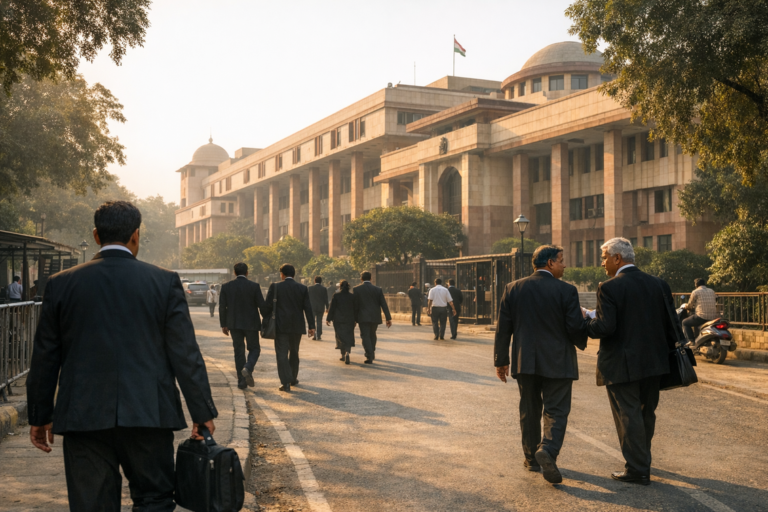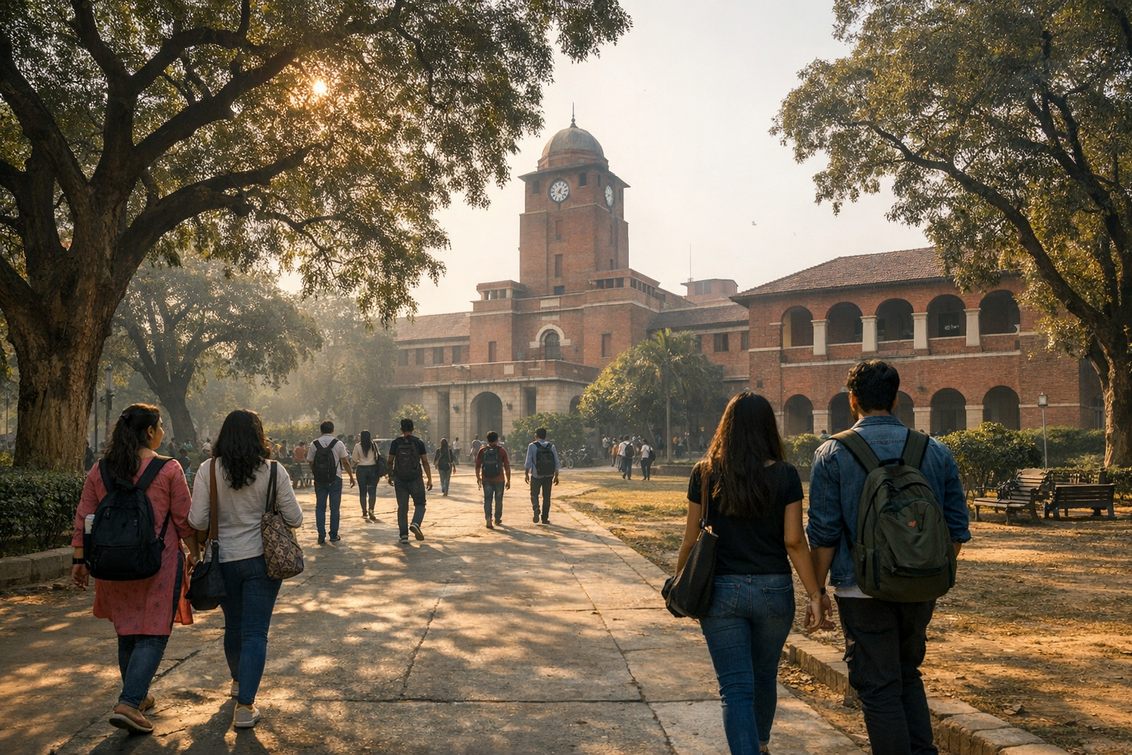
New Delhi — Next time you’re sipping chai outside Delhi University’s Arts Faculty or squeezing through the crowds at Kamla Nagar, here’s something worth thinking about: these familiar student hangouts belong to a university with its own remarkable freedom struggle history. Long before Instagram reels, college festivals, and campus election posters, DU students were getting involved in India’s fight against British rule. A new book highlighted by Scroll.in is bringing attention to this lesser-discussed chapter of Delhi’s past, and honestly, it’s a story today’s students deserve to know.
Before Campus Elections, DU Students Were Fighting for Freedom
When we talk about India’s independence movement, certain names and places immediately come to mind: Mahatma Gandhi, Bhagat Singh, the Red Fort, and the historic protests that challenged British colonial rule. But what about ordinary university students who attended lectures, prepared for examinations, and simultaneously participated in political activities?
That’s the fascinating question raised by a newly highlighted book examining Delhi University students’ participation in India’s freedom movement.
According to the report published by Scroll.in, the book focuses attention on the role university students played during the struggle for independence. It offers an opportunity to reconsider how educational institutions became connected with political developments during the colonial period.
Delhi University was established in 1922, when India was already experiencing significant political mobilisation against British rule. The university initially consisted of three colleges: St. Stephen’s College, Hindu College, and Ramjas College.
That founding date matters. DU emerged during a period when students across India were debating nationalism, political representation, civil disobedience, and the future of British rule.
By the 1930s and 1940s, student participation had become an important part of the wider independence movement. Young people attended political meetings, discussed nationalist ideas, and joined demonstrations in different parts of the country.
Universities were particularly important because they brought educated young Indians together in spaces where political ideas could circulate.
However, it’s important to distinguish the broader history of student activism from the specific findings of the new book. Without examining the complete text, individual incidents and claims about particular DU students should not be treated as independently verified.
What makes this subject valuable is the perspective it offers: Delhi University’s history extends far beyond academic rankings, campus politics, and famous alumni.
Why This Forgotten DU History Matters to Today’s Delhiites
For today’s Delhi University students, history often feels like something confined to textbooks, examination syllabuses, or monuments visited during school trips.
But imagine walking through North Campus knowing that the institution you’re studying at was established while India’s independence movement was gathering momentum.
That changes how you look at familiar surroundings.
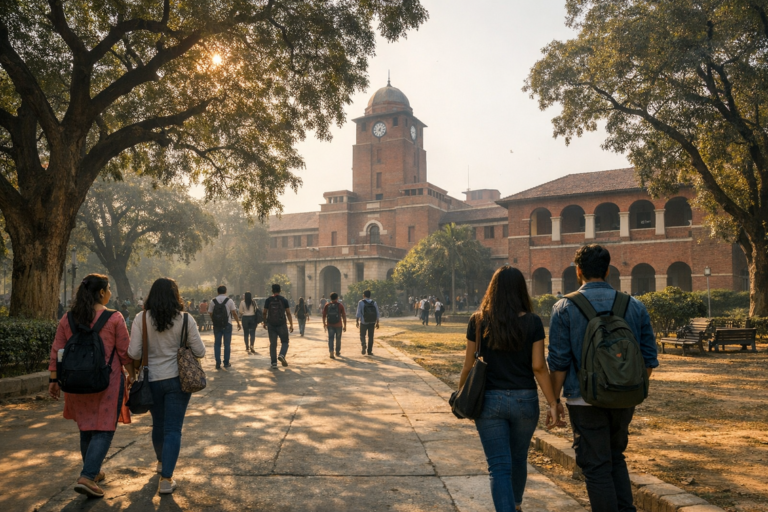
Take the area around Vishwavidyalaya Metro Station. During the morning rush, students hurry towards classes, e-rickshaw drivers call out for passengers, and food stalls prepare for another busy day.
Locals familiar with North Campus often describe the morning routine in simple terms: “Reach before the college rush, otherwise even a short ride can take longer than expected.”
It’s the kind of everyday observation that captures modern campus life. But the same university also offers a window into a much older story of political participation.
For students of history, political science, journalism, and literature, the subject creates opportunities for research projects, presentations, and campus discussions.
For families visiting Delhi, it offers another reason to explore the university area beyond admission enquiries or college shopping.
Even local businesses around Kamla Nagar and Hudson Lane are part of the larger student ecosystem that gives North Campus its identity today.
And for office-goers who studied at DU years ago, the story might encourage a fresh look at their alma mater.
The practical impact isn’t a new traffic restriction or Metro announcement. It’s an opportunity to understand the historical importance of places Delhiites already know.
From Colonial-Era Delhi to the Independence Movement
To understand Delhi University’s connection with the freedom struggle, we need to rewind to the early twentieth century.
In 1911, the British government announced that India’s capital would move from Calcutta to Delhi. The following decades brought major administrative and architectural changes to the city.
New Delhi developed as the centre of colonial administration, while educational institutions expanded alongside the city’s changing political importance.
Delhi University was established in 1922 under an Act of the Central Legislative Assembly.
Its early development coincided with a period of intense political activity across India.
The Non-Cooperation Movement had already encouraged students in different parts of the country to question their relationship with colonial educational institutions.
Later, the Civil Disobedience Movement and the Quit India Movement created further opportunities for student involvement in nationalist politics.
Delhi wasn’t alone in experiencing student activism. Educational centres in cities such as Allahabad, Lahore, Calcutta, and Banaras also became important spaces for political debate and mobilisation.
However, Delhi held a distinctive position because it was the seat of British India’s central government.
That geographical and political setting makes DU’s early history particularly interesting.
Today, landmarks such as the Red Fort, Kashmere Gate, and the historic buildings of Old Delhi help visitors understand the city’s colonial and independence-era past.
But the university’s contribution deserves attention alongside these better-known historical locations.
Want to Explore DU’s Freedom Movement History? Start Here
You don’t need to be a history student to explore this subject. A little planning can turn an ordinary North Campus visit into an interesting educational outing.
Here are some practical ways to get started without spending much money or wasting time moving between distant locations.
- Start at Vishwavidyalaya Metro Station: Take the Yellow Line to Vishwavidyalaya and explore the public areas around North Campus. The station provides convenient access to the university neighbourhood. If you’re visiting during weekday college hours, allow extra time for pedestrian crowds and e-rickshaw queues. Avoid entering academic buildings without permission, as campus access rules can vary.
- Research DU’s founding colleges: Read about St. Stephen’s College, Hindu College, and Ramjas College, the three institutions associated with the university’s establishment in 1922. Their official websites and institutional histories are useful starting points. Remember that a college’s present-day location may differ from its original colonial-era premises.
- Visit the university library or explore digital archives: Look for books, historical publications, university records, and newspaper archives covering student participation in the independence movement. The Delhi University Library System and university history resources are useful places to begin. Check visitor eligibility, opening hours, and access requirements before travelling.
- Combine your campus trip with nearby heritage stops: Kashmere Gate and Civil Lines are useful areas for exploring Delhi’s colonial-era geography. Kashmere Gate Metro Station is an interchange on the Yellow, Red, and Violet Lines, making it a convenient transport point. Not every old building is directly connected to DU’s freedom movement history, so verify historical claims before including them in a project.
- Read the book coverage before making historical claims: Find the Scroll.in report titled “A new book describes Delhi University students’ participation in the freedom movement.” Use it to identify the book and its author, then consult the original publication for detailed evidence. This is particularly important for students preparing assignments, presentations, or research papers.
- Make it an affordable North Campus outing: After exploring publicly accessible areas, head towards Kamla Nagar Market or Hudson Lane for refreshments. Kamla Nagar is popular for shopping and casual food stops, while Hudson Lane has numerous cafés. Walking where practical can help avoid short-distance traffic delays, especially around busy college hours.
📍 Spot Check: Planning a Delhi University history outing? Start with Vishwavidyalaya Metro Station (Yellow Line), then explore publicly accessible parts of the North Campus neighbourhood near the Arts Faculty, Chhatra Marg, Hindu College, Ramjas College, and the present-day St. Stephen’s College campus. For refreshments, consider Kamla Nagar Market or Hudson Lane. If you want to extend the trip, Civil Lines and Kashmere Gate offer additional colonial-era context. These locations are useful starting points for exploring Delhi’s history, but they should not automatically be described as sites of specific freedom movement incidents without supporting records. Check campus entry restrictions and institutional visiting hours before heading out.
Delhi’s Student Culture Has Always Been About More Than Classes
One of the most interesting things about Delhi University is how strongly student life shapes the surrounding neighbourhoods.
Ask someone who studied at North Campus in the 1990s, 2000s, or even a few years ago, and they’ll probably remember the same broad experiences: crowded classrooms, college friendships, debates over tea, examination stress, and endless discussions about what comes next.
The details change with every generation, but the university remains a place where young people develop opinions about society and their own futures.
That’s why the new attention surrounding DU’s role in the freedom movement feels relevant.
It reminds us that universities aren’t simply buildings where degrees are awarded. They’re places where students encounter ideas that can influence the wider world.
Today’s Delhi University has a very different political and social environment from the institution established in 1922. Still, understanding its early history can provide perspective on how student participation in public life has evolved.
There’s also an important distinction worth remembering: celebrating historical student activism doesn’t mean every modern protest or political position should be treated as equivalent to the independence struggle.
Different periods have different circumstances, goals, and consequences.
History becomes more useful when we examine those differences rather than forcing simple comparisons.
The Final Word
Delhi has a habit of hiding important history behind everyday routines. We rush past old buildings, complain about traffic near college gates, and make weekend plans without always considering what happened in these neighbourhoods decades ago.
People Also Ask
Is this officially confirmed?
Yes, but implementation on ground may vary.
Who benefits the most?
Daily commuters, students and small shop owners.
Any hidden catch?
Check timings & local enforcement.
Delhi University’s connection with India’s freedom movement deserves more attention, especially from students who experience its campus culture every day.
The new book highlighted by Scroll.in provides a timely reason to explore that history, ask better questions, and look beyond the usual stories about campus elections and college rankings.
For SaddiDilli readers, the suggestion is simple: next time you’re around North Campus, spend a little time learning about the university’s past before heading for your usual chai or café stop.
Do you think Delhi University should organise more public heritage walks and exhibitions about its students’ role in India’s freedom struggle?
Have something to say? Drop a comment below!
#Delhi #NorthDelhi #DelhiUniversity #FreedomMovement #IndianHistory
About the Author