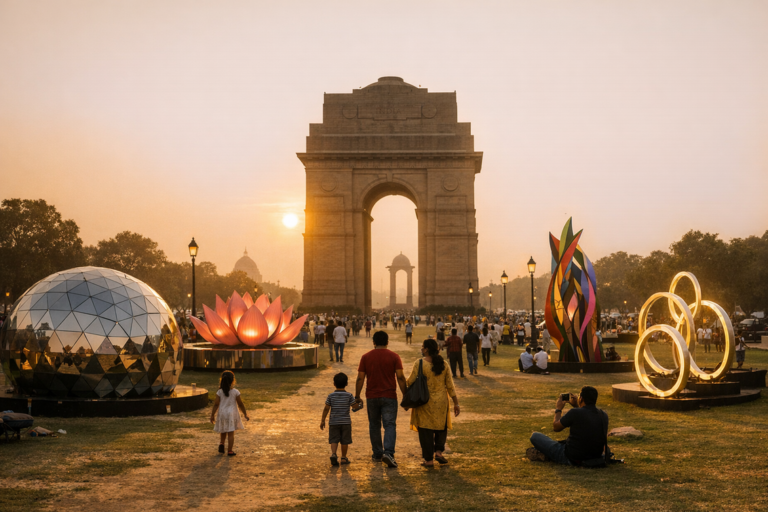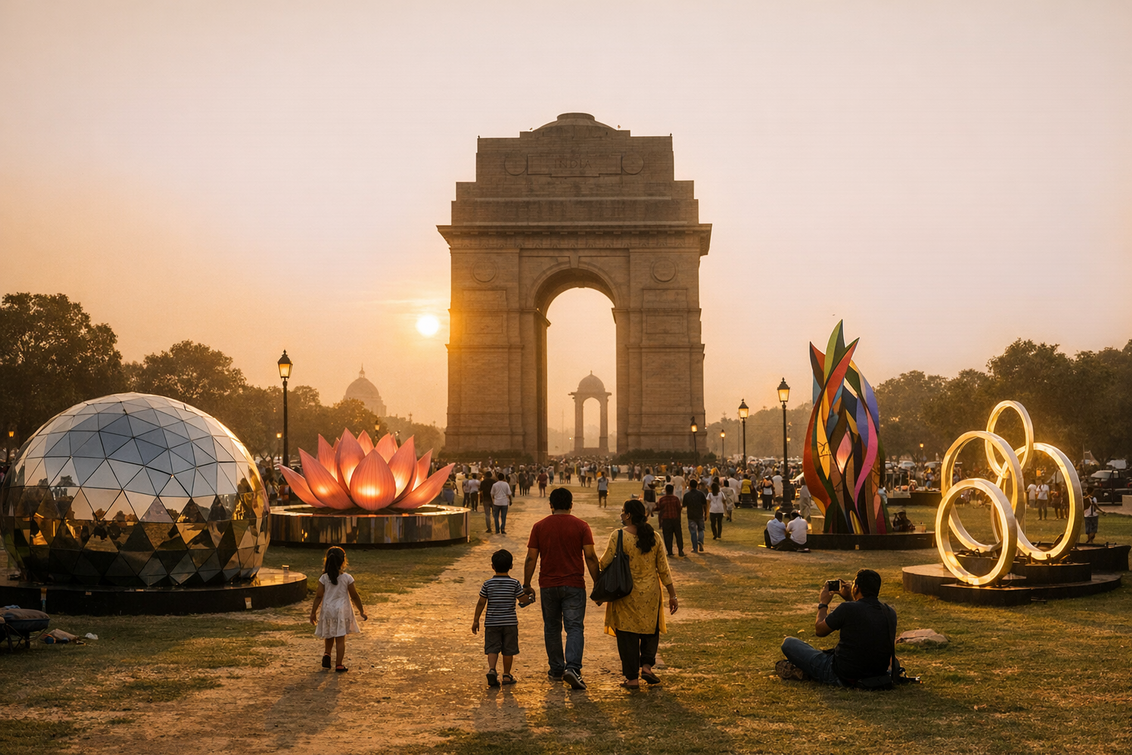
New Delhi — Imagine stepping out of Mandi House Metro Station and finding an art exhibition that makes you forget your usual office commute. Or picture spending a Sunday afternoon exploring Indian crafts, installations, and cultural performances instead of doing another round of CP cafés. Sounds interesting, right? Delhi could be moving towards something along those lines. With the Delhi Chief Minister and Union Culture Minister Gajendra Singh Shekhawat discussing the framework for India Biennale 2026, the capital’s cultural calendar is worth watching closely.
India Biennale 2026: Why Delhi’s Art Scene Is Getting Attention
Delhi has never been short of cultural events. From exhibitions at Lalit Kala Akademi to performances around Mandi House, the city offers plenty for people interested in art, theatre, and heritage. However, the proposed India Biennale 2026 could potentially bring these interests together on a larger platform.
According to a report by The New Indian Express, the Delhi Chief Minister and Union Minister Gajendra Singh Shekhawat held discussions concerning the framework for India Biennale 2026.
The meeting is an important planning development, but residents should understand one thing: a discussion about the framework is not the same as a confirmed public event schedule.
Details such as exhibition venues, participating artists, ticket prices, public access, and exact dates should be treated as pending until formally announced.
So, what exactly is a biennale?
A biennale is generally a major cultural exhibition or programme organised every two years. Such events often bring together artists, curators, cultural institutions, and visitors to explore contemporary creative work.
Internationally, the Venice Biennale is among the best-known examples. India has its own experience with large-scale art programming, including the Kochi-Muziris Biennale in Kerala.
For Delhi, the opportunity is particularly interesting because the capital already has museums, galleries, historical monuments, art colleges, and established cultural spaces.
If India Biennale 2026 develops into an accessible public programme, it could offer Delhiites something beyond conventional gallery visits: a chance to experience art through exhibitions, conversations, installations, and possibly community activities.
For now, however, these possibilities remain dependent on the final programme.
From Mandi House to Connaught Place: What Could Change?
For regular Delhi residents, the biggest question isn’t whether an international-level cultural event sounds impressive. It’s whether ordinary people will actually be able to enjoy it.
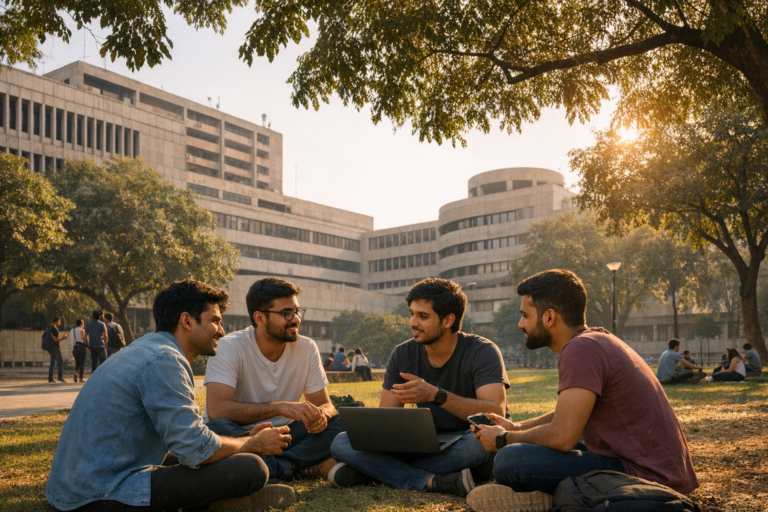
Consider a Delhi University student travelling from North Campus. If exhibitions are accessible through the Yellow Line and nearby interchange stations, visiting could be relatively affordable. But if venues require multiple cab rides, the experience becomes less attractive for students managing limited budgets.
The same applies to working professionals around Connaught Place, Barakhamba Road, and ITO.
A well-planned cultural programme could give office-goers something interesting to explore after work, provided opening hours extend beyond the usual working day.
Families from Noida, Ghaziabad, and Gurugram would have different concerns: parking, weekend crowds, child-friendly facilities, and convenient public transport.
There is also a potential benefit for small businesses.
Food outlets, bookstores, cafés, and local vendors near participating venues could see additional customers if the event attracts substantial footfall.
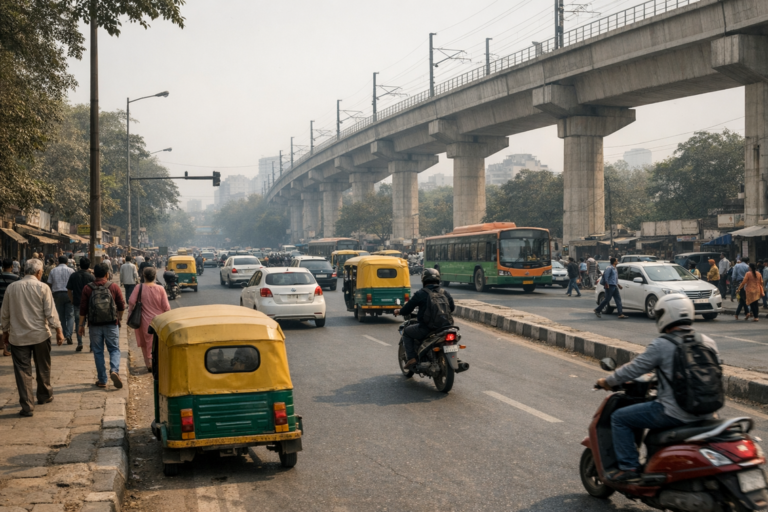
Anyone familiar with Mandi House knows the familiar scene: autos gathering near the Metro exits, theatre audiences checking performance timings, and people heading towards nearby cultural institutions.
Residents often describe the area’s appeal with a simple sentiment: “You can come for one performance and discover three more things happening nearby.”
That is the kind of everyday cultural accessibility a successful biennale should aim to build upon.
However, additional visitors could also mean crowded Metro exits, slower traffic, and parking pressure. Clear signage, crowd management, and reliable visitor information would therefore be essential.
Delhi Has Hosted Big Art Events Before — Here’s What We Can Learn
Delhi’s connection with international art exhibitions is not new.
One particularly relevant example is the India Art Fair, which has helped establish New Delhi as an important destination for collectors, galleries, artists, and art enthusiasts.
The fair has traditionally been associated with the NSIC Exhibition Grounds in Okhla, drawing visitors interested in contemporary art and creative industries.
Another important reference is the National Museum and the city’s network of government-supported cultural institutions.
Places such as the National Gallery of Modern Art near India Gate and Lalit Kala Akademi around Mandi House demonstrate that Delhi already possesses substantial infrastructure for cultural engagement.
Delhi’s older cultural traditions matter just as much.
Walk through Dilli Haat INA, and you’ll find a different kind of creative experience: regional handicrafts, textiles, handmade products, and food traditions from across India.
Meanwhile, the India International Centre and India Habitat Centre regularly provide spaces for discussions, exhibitions, and performances.
The challenge for India Biennale 2026 would be connecting established cultural institutions with wider public participation.
Kochi offers a useful comparison. The Kochi-Muziris Biennale has demonstrated how contemporary art can extend beyond conventional gallery settings and become part of a city’s cultural identity.
Delhi’s geography, transport network, and institutional landscape are different, so its approach would need to reflect local realities.
Success should not be measured only by international attention. It should also depend on whether Delhi residents feel welcome, informed, and able to participate.
Planning to Explore India Biennale 2026? Do These Things First
- 1. Wait for the official venue and date announcements: Don’t assume exhibitions will take place at India Gate, Mandi House, or any particular cultural centre. These are existing Delhi landmarks, not confirmed India Biennale 2026 locations. Check announcements from the Ministry of Culture and relevant Delhi government departments before planning your visit.
- 2. Keep your Delhi Metro route ready: If central Delhi venues are eventually announced, Rajiv Chowk, Mandi House, Central Secretariat, and Khan Market may be useful stations depending on the actual location. Use the DMRC route planner or official Metro information to check interchanges, travel times, and the nearest exit. Avoid booking expensive cabs until you know where the exhibitions will happen.
- 3. Check ticketing, accessibility, and photography rules: Some cultural exhibitions offer free entry, while others require paid tickets or advance registration. Never assume entry will be free. Families should also check wheelchair access, washrooms, drinking water, and whether photography is permitted. Students should look for officially announced concessions, workshops, or educational programmes.
- 4. Combine your visit with nearby Delhi experiences: If exhibitions are eventually hosted around central Delhi, you could explore Janpath Market, Bengali Market, or the cultural spaces near Mandi House on the same trip. If venues are closer to South Delhi, consider combining your outing with an existing attraction such as Dilli Haat INA. Always check actual distances before finalising your itinerary.
- 5. Choose your visiting hours carefully: Delhi’s traffic can turn a short outing into a long journey, particularly during weekday office hours. If the organisers announce weekend sessions, consider arriving close to opening time. Carry water, wear comfortable shoes, and account for seasonal weather. November and December can bring poor air quality, while warmer months require additional precautions against heat.
- 6. Watch for opportunities beyond sightseeing: Art students, photographers, designers, and young creators should monitor official announcements for possible talks, workshops, volunteering opportunities, or public programmes. Such opportunities have not been confirmed for India Biennale 2026, but checking early could help interested residents avoid missing application deadlines if they are introduced.
📍 Spot Check: Delhiites interested in exploring the capital’s existing art circuit can start with the National Gallery of Modern Art near India Gate, reached conveniently from the Khan Market side; Lalit Kala Akademi at Rabindra Bhavan near Mandi House Metro Station; and the India Habitat Centre on Lodhi Road, accessible from Jor Bagh or nearby Metro connections. Dilli Haat INA is another worthwhile stop for traditional crafts and regional products. These are useful cultural landmarks to explore independently, not confirmed India Biennale 2026 venues. Before visiting, check each institution’s current opening hours, ticket requirements, and exhibition calendar.
The Final Word
Delhi doesn’t need another cultural announcement that sounds impressive on paper but remains disconnected from everyday residents.
People Also Ask
Is this officially confirmed?
Yes, but implementation on ground may vary.
Who benefits the most?
Daily commuters, students and small shop owners.
Any hidden catch?
Check timings & local enforcement.
What the city needs is an event that makes art easier to discover, especially for students, families, young professionals, and people who have never entered a formal gallery.
India Biennale 2026 could become an opportunity to strengthen that connection, provided the planning focuses on affordable access, reliable transport, clear communication, and meaningful public participation.
The discussions involving the Delhi government and the Union Culture Ministry are an early development worth following. But the real picture will emerge when organisers release confirmed venues, dates, programmes, and visitor guidelines.
Until then, Delhi’s existing galleries and cultural centres are already worth exploring.
Would you attend India Biennale 2026 if it offered affordable exhibitions and cultural experiences across Delhi, or do you think the city should focus on improving its existing art spaces first?
Have something to say? Drop a comment below!
#Delhi #DelhiNCR #IndiaBiennale2026 #DelhiArtScene #CulturalEvents
About the Author